
EMGS Team
11th nov, 2026
0 reads
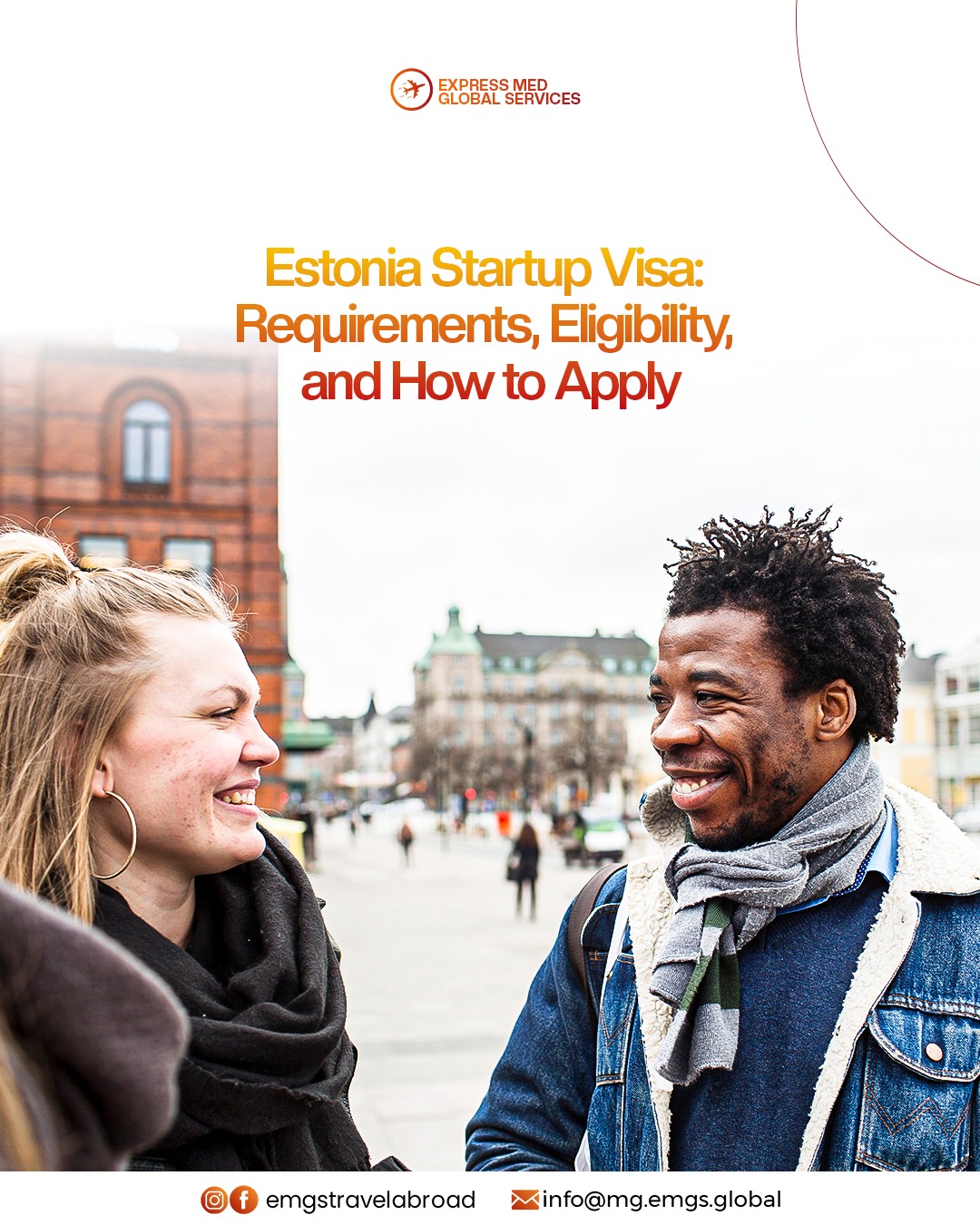
Estonia Startup Visa: Requirements, Eligibility, and How to Apply
Building a successful business or accumulating substantial wealth does not always mean you have found the environment in which you want to spend the rest of your life. For many African entrepreneurs and business owners, the desire to relocate is not necessarily driven by financial hardship. It may be about accessing more reliable infrastructure, expanding into international markets, operating in a more predictable business environment, improving personal security or creating better opportunities for their families.
For founders who want to take that next step, Estonia offers an interesting option. The country has a Startup Visa program designed to attract entrepreneurs developing innovative, scalable businesses with international growth potential. However, moving there as a founder involves more than having money or registering a company. Your business must meet specific eligibility criteria, and you must understand the application process before making plans.
What Is the Estonia Startup Visa?
The Estonia Startup Visa is an immigration route for non-EU founders who intend to establish or develop an innovative startup in Estonia. It allows an approved founder to apply for a short-stay or long-stay visa for startup entrepreneurship and, after establishing the company, potentially a temporary residence permit.
The program connects founders with Estonia's startup ecosystem and its digital business environment. It is not a general business visa for anyone who wants to open a company, invest in property or become self-employed. The business must meet the legal startup definition and receive a positive assessment from the Estonian Startup Committee. Startup Estonia explains the founder route.
Who Is Eligible?
The business must be innovative, repeatable and capable of significant international growth. Estonia's Foreign Nationals Act describes a startup as a company developing a business model with high global growth potential that is innovative and replicable, and contributes significantly to Estonia's business environment.
In practice, the committee looks for more than an idea or a conventional business plan. Work in Estonia's guidance describes a startup that has moved beyond the idea stage, with a working minimum viable product (MVP), real-world testing and early signs of traction. These may include paying customers, revenue and an established team. A scalable technology solution may qualify; a neighborhood restaurant, ordinary retail shop or one-person consultancy generally will not. Being online or using technology does not automatically make a business a startup. The company should also be no more than 10 years old, according to Startup Estonia's eligibility guidance.
You do not need an Estonian-registered company before applying for the Startup Visa. You do need to establish one before applying for the startup entrepreneurship residence permit.
Requirements and Documents
There are two stages: proving that the business qualifies and proving that you meet immigration requirements. For the Startup Committee, prepare a clear description of the product, the problem it solves, its innovation, target market, business model, growth potential, development stage and founding team. Be ready to explain why Estonia is relevant to the startup's plans.
For the visa application, applicants generally need a valid passport, completed application form, committee confirmation or application code, photograph, proof of funds, health insurance, and information about accommodation and travel plans. Insurance must meet the applicable coverage requirements, generally at least €30,000 for the intended stay. The mission may request further evidence, and foreign documents may need translation and authentication.
How to Apply
First, assess the business against the Startup Visa criteria and complete Startup Estonia's online eligibility assessment. If it appears suitable, submit the startup application to the Startup Committee with evidence of the product and its potential.
The committee's assessment is free. Current Startup Estonia guidance says applicants can expect a response within 10 working days. A positive decision comes with confirmation and a unique application code. This is not a visa approval; it only confirms that the business meets the startup criteria.
Next, apply for the appropriate Estonian long-stay D visa through an Estonian foreign mission that accepts D visa applications, or through the Police and Border Guard Board where permitted. After entering Estonia, establish and register the company. Once registered, you may apply for the temporary residence permit for startup entrepreneurship. Work in Estonia outlines the application sequence.
Visa Duration and Residence Options
A short-stay C visa allows a stay of up to 90 days in a 180-day period. For founders intending to relocate and build the business, the long-stay D visa is generally the relevant route. It can be issued for up to 365 days, with a possible extension of up to 183 days, subject to approval.
After registering the Estonian company, a founder may apply for a temporary residence permit for startup entrepreneurship. It can be issued for up to five years, depending on the authorities' decision. Company registration is therefore not a prerequisite for the initial Startup Visa application, but it is required for the subsequent residence permit. The startup route is distinct from the ordinary business residence permit, which has separate investment and business conditions.
Application Fees and Financial Requirements
The Startup Committee assessment has no application fee. The current state fee for a long-stay D visa is €120. Estonia's Ministry of Foreign Affairs lists the financial means requirement for startup business applicants as €880 per month. For an accompanying spouse, the listed amount is €704 per month. These are proof-of-means requirements, not estimates of all relocation expenses. Check the Ministry's current D visa fees and financial requirements.
Applicants should also budget for insurance, flights, accommodation, company setup, translations, document legalization and everyday costs. The required funds may not be enough to operate the startup or support a family comfortably, particularly before the business generates revenue.
Can You Bring Your Family?
Eligible founders may apply for visas for their spouse or registered partner and minor children. The law also provides for an adult child who cannot manage independently because of a health condition or disability. Family members must submit their own applications and meet the applicable requirements, including proof of family relationship and sufficient financial means.
A spouse may work in Estonia if the employer registers the short-term employment with the Police and Border Guard Board before work begins. If the spouse later receives a residence permit to settle with the founder, they may work without that separate short-term employment registration. Family visas are not automatic; each application is assessed.
Is the Startup Visa the Same as e-Residency?
Estonia's e-Residency gives a non-resident a government-issued digital identity for accessing online services and establishing or managing an Estonian company remotely. It does not provide a visa, residence permit, citizenship or the right to enter or live in Estonia.
An e-resident may register an Estonian company without moving there, but company ownership alone does not qualify the owner for the Startup Visa. The founder must still meet the startup criteria and obtain the Startup Committee's approval. If relocation is not part of the business plan, e-Residency may be more relevant than an immigration route. Estonia's e-Residency knowledge base explains what the digital identity does and does not provide.
Practical Considerations for African Applicants
Applicants in Nigeria and elsewhere in Africa should confirm where they can submit a long-stay visa application before booking travel. Estonia's Ministry of Foreign Affairs confirms that Belgium represents Estonia in Nigeria for Schengen visa applications only. For a long-stay D visa, applicants must contact the nearest Estonian foreign mission that handles such applications and confirm its appointment and submission arrangements in advance. Check Estonia's official visa representation information.
Prepare a credible pitch supported by product demonstrations, market research, customer feedback, partnerships or other evidence of progress. Keep business and personal finances clear, and allow for the cost of relocating before the startup generates revenue. Committee approval does not remove the need to satisfy immigration checks.
Is Estonia the Right Route for Your Startup?
The Startup Visa is intended for founders building genuinely innovative, repeatable businesses with international growth potential. It is not a shortcut for registering an ordinary company in Europe. Assess your product honestly, understand the difference between committee approval and immigration permission, and prepare a realistic financial plan before committing to the process. A well-prepared application should show not only what the business could become, but why Estonia is a practical place to develop it.
NB: You can purchase EMGS travel and migration services here. You can also refer others to EMGS and earn referral rewards.
Contact us to begin your journey today.
Enjoyed this post? Like & share the knowledge!

How to Get Funding for Your Business Idea Through EMGS
EMGS Team
19th nov, 2026
Across Africa, entrepreneurs are developing products, building services and finding practical ways to address problems in their communities. Some are turning professional experience into businesses; others are testing ideas shaped by gaps they have noticed in the market. The quality of an idea, however, does not always determine how far it goes. Access to the resources needed to develop, test and launch it can make a significant difference. For many founders, the difficult part begins when a promising concept has to become a working business. Equipment must be purchased, products developed, customers reached and operating costs covered. Without suitable business funding, progress can stall before the idea has had a fair chance in the market. Express Med Global Services (EMGS) invites people with business ideas to explore potential funding partnerships with the organization. Entrepreneurs whose proposals align with the interests of its board can schedule a meeting to discuss their ideas and the possibility of working together.
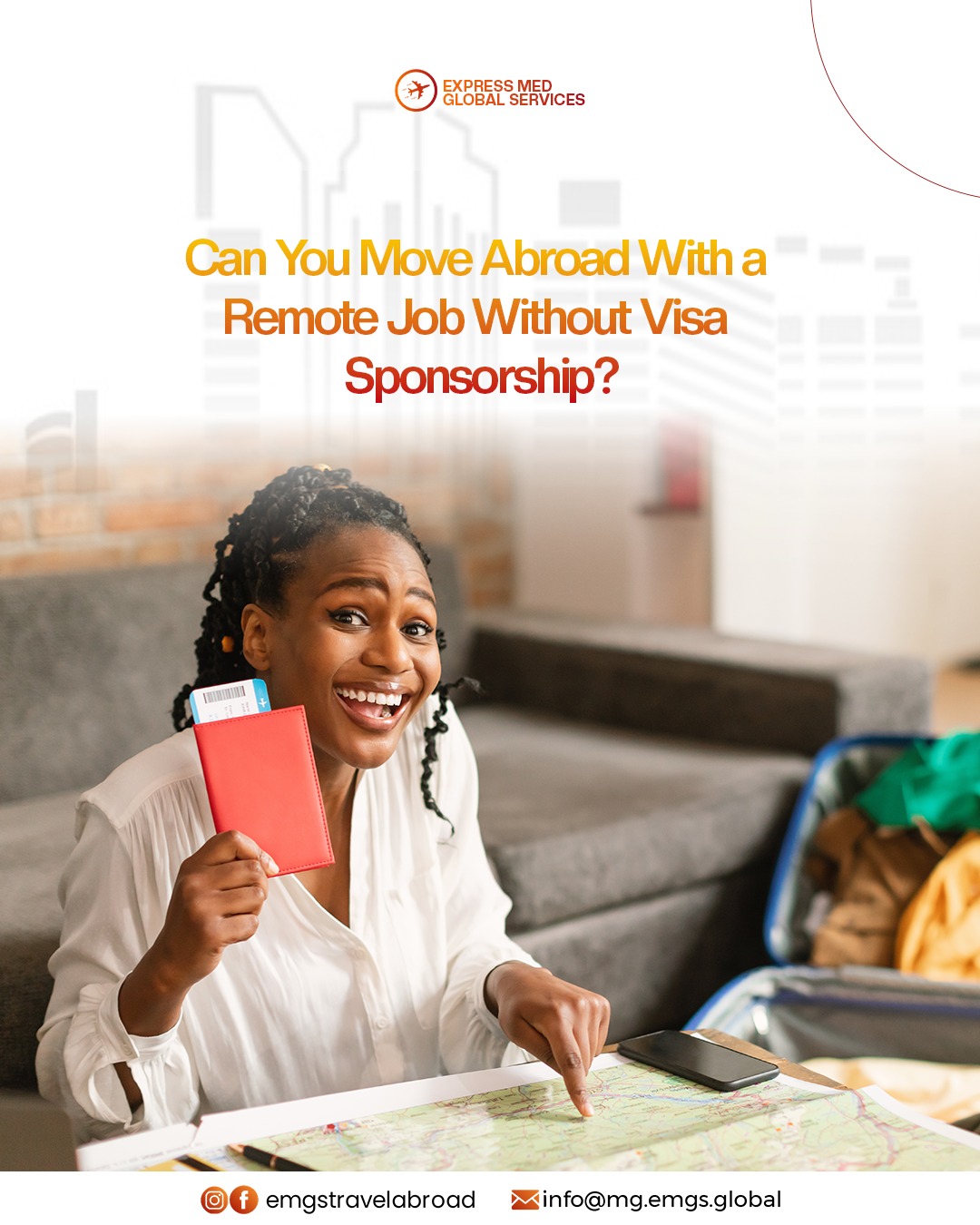
Can You Move Abroad With a Remote Job Without Visa Sponsorship?
EMGS Team
16th nov, 2026
For many people, an international remote job offers an attractive arrangement: earn in a stronger currency, work for an overseas company and enjoy the comfort of living somewhere your income goes further. It can also make it easier to save and become financially stable. Eventually, however, you may want more than the flexibility of working from home. You might decide to relocate abroad, only to discover that your employer does not offer visa sponsorship. Does that mean you cannot move? Some countries have immigration routes that allow eligible remote employees, freelancers and business owners to relocate independently, without a local employer sponsoring their applications.