
EMGS Team
24th feb, 2026
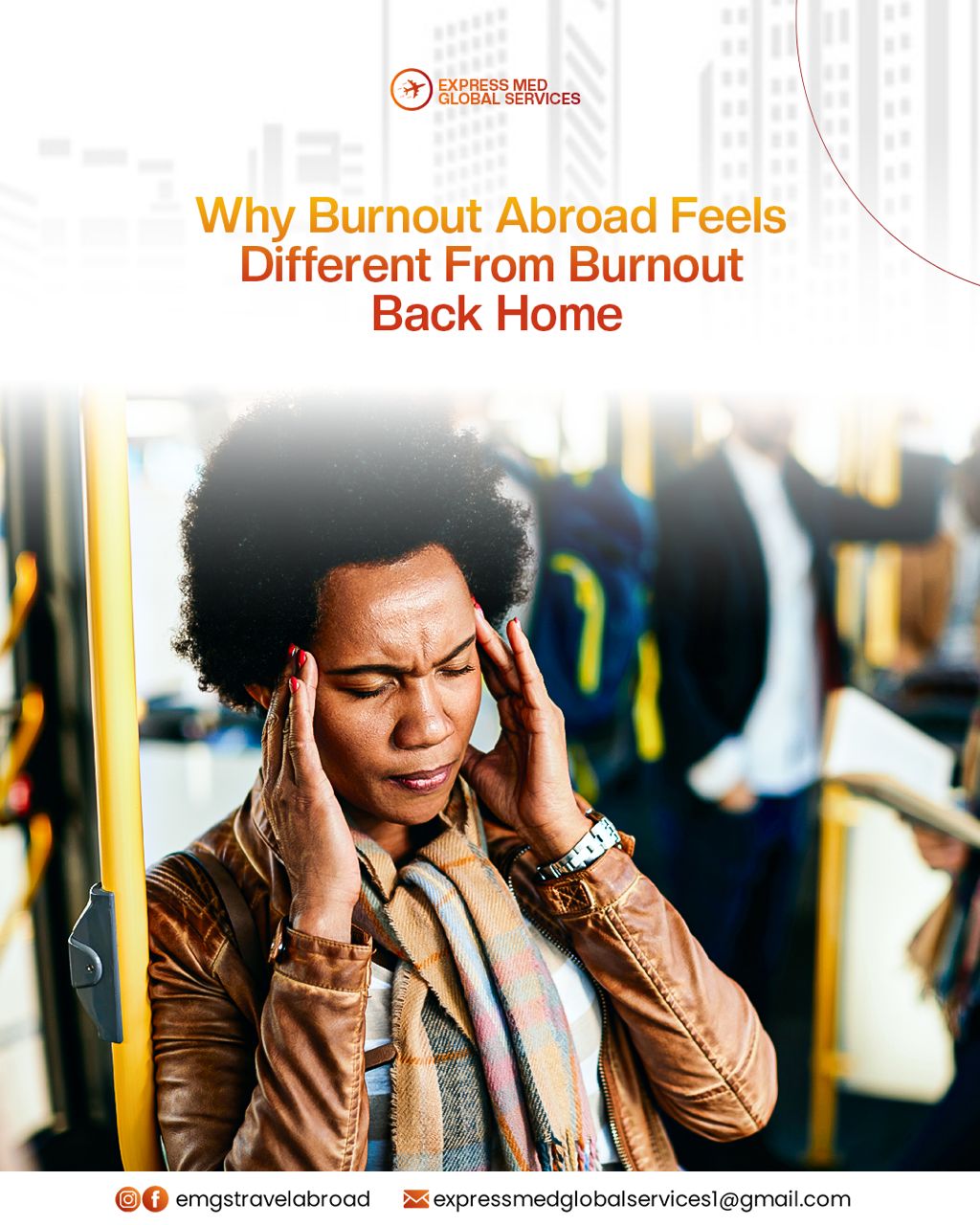
Why burnout abroad feels different from burnout back home
Burnout doesn’t disappear after relocation — it simply changes form. Many African health workers abroad find themselves exhausted in ways that feel more psychological than physical. This article explores why burnout in structured, high-accountability systems feels different from burnout back home, and how identity shifts, performance pressure, and expanded responsibilities quietly shape the experience.
At home, burnout was visible and shared
Back home, burnout was collective. Everyone knew the system was strained. Complaints were communal. There was shared language for frustration. You could say, “This place is stressful,” and ten colleagues would nod in agreement. The stress felt external — caused by the system. Abroad, the system may function more efficiently. Staffing ratios might be better. Equipment works. Policies are structured. So when you feel exhausted, it doesn’t feel systemic. It feels personal. That shift alone makes burnout harder to recognise.
Performance pressure replaces survival pressure
In many African healthcare systems, the stress often comes from scarcity. You improvise. You multitask. You manage crisis. Abroad, the stress shifts from scarcity to scrutiny. Documentation must be precise. Protocol adherence is strict. Patient satisfaction metrics matter. Audit trails are detailed. Litigation risk is real. Instead of fighting lack of resources, you’re navigating high accountability environments. The pressure is less chaotic — but more constant. And constant pressure drains differently.
You’re not just working — you’re proving
For many African professionals abroad, there is an added psychological layer: proving. Proving that: - Your training is valid - Your accent doesn’t mean incompetence - Your degree is equivalent - You deserve your position Even when no one says it explicitly, you may feel it internally. So you overcompensate. You double-check everything. You avoid minor errors. You volunteer for extra shifts. You try not to “stand out negatively.” That hyper-vigilance is exhausting. Burnout abroad often comes from prolonged self-monitoring — not just workload.
Isolation changes the emotional load
Back home, even in chaotic systems, you likely had emotional anchors. Colleagues who understood your humour. Family nearby. Cultural familiarity. Language comfort. Abroad, even with supportive colleagues, you may lack deep social grounding. After a difficult shift, you go home to: - A smaller support system - Different cultural norms - Time zone gaps with family - Emotional distance Stress without cultural familiarity compounds differently. You may not even have the right language to describe what you’re feeling.
Financial pressure doesn’t disappear — it expands
Many health workers assume higher income will reduce stress. But migration often expands responsibility. Remittances. Currency fluctuations. Extended family expectations. Visa renewals. Professional fees. Pension contributions. You may be earning more — but carrying more. Burnout abroad can feel heavier because you cannot easily scale back. If you reduce shifts, financial commitments don’t reduce proportionally. You are tired — but financially obligated.
Identity fatigue
There is another layer rarely discussed: identity fatigue. You are: - Adapting to new communication styles - Navigating cultural differences - Managing subtle bias - Adjusting professional posture You are constantly calibrating yourself. At home, you operated on instinct. Abroad, you operate on awareness. Awareness requires energy. Over time, that energy drain contributes to burnout — even if the job itself is structured.
Why burnout abroad feels confusing
The most disorienting part is this: From the outside, you look successful. Better salary. International experience. Advanced system exposure. So when you feel exhausted, you question yourself. “Why am I tired? Isn’t this better than before?” That internal conflict intensifies burnout. Back home, exhaustion felt justified by obvious systemic flaws. Abroad, exhaustion can feel unjustified — and therefore shameful. But it is not weakness. It is cumulative adaptation strain.
The danger of silent burnout
Because burnout abroad is less visibly chaotic, it often goes unaddressed. You continue functioning. You meet targets. You avoid complaints. But internally, you may experience: - Emotional numbness - Reduced enthusiasm - Irritability - Doubt about staying long-term - Fantasies about quitting healthcare entirely When left unchecked, this can quietly derail long-term career strategy.
Reframing the experience
Burnout abroad does not mean you made the wrong decision. It means you are navigating: - High accountability systems - Cultural recalibration - Financial responsibility expansion - Identity adjustment The solution is not necessarily relocation again. It is recognition. Recognition that your exhaustion has layers.
What helps
For many African health workers, relief begins when they: - Reduce overtime dependency - Build stable social networks beyond work - Seek mentorship within their professional system - Separate financial obligations from identity - Create clear career progression plans instead of drifting Structure reduces stress. Uncertainty magnifies it.
The quiet truth
Burnout abroad is not always louder than burnout back home. It is often more private. Less chaotic. More psychological. More identity-linked. And because it doesn’t look dramatic, it is easy to dismiss. But exhaustion in a functional system is still exhaustion. If you feel it, acknowledge it. Migration changes many things. It changes how you work. How you earn. How you see yourself. It also changes how you burn out. Understanding that difference is the first step toward managing it — instead of quietly enduring it. Contact Us, click on this link https://selar.co/m/Express_Global to purchase any of our services or visit our website https://emgs.global/ — we're just a click away. For CV, Supporting Statement, and Cover Letter: Chat this customer care number: +234 905 672 3938

The Reality of Planning a Permanent Life vs “Just Staying for Now”
EMGS Team
11th may, 2026
One of the quietest tensions in migration is this: On paper, you are building a life abroad. But emotionally, you may still be “just staying for now.” And those two mindsets shape your decisions in very different ways.
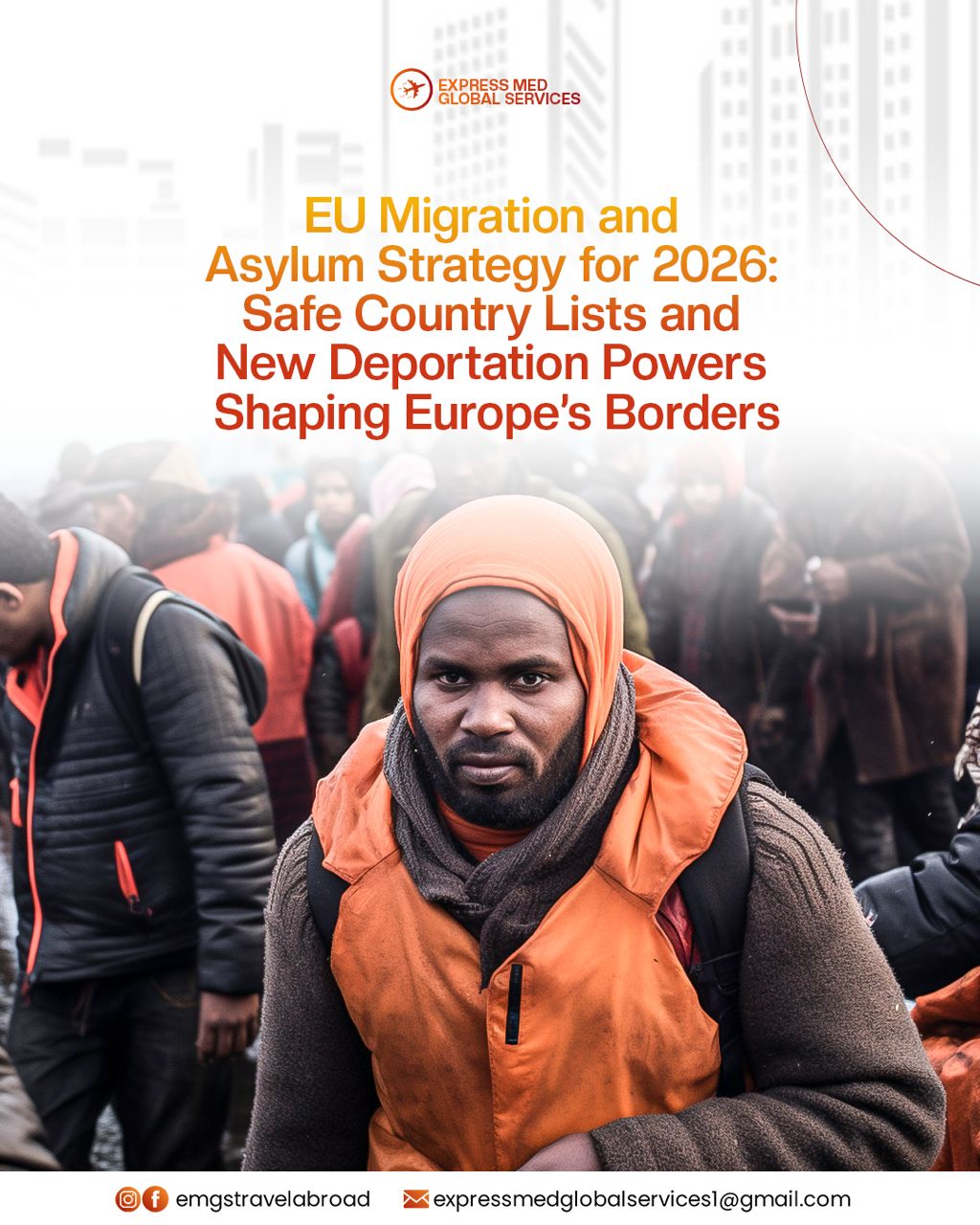
EU Migration and Asylum Strategy for 2026: Safe Country Lists and Enhanced Return Powers Shaping Europe’s Borders
EMGS Team
23rd feb, 2026
Europe’s asylum landscape is changing fast in 2026.