
EMGS Team
23rd oct, 2026
0 reads
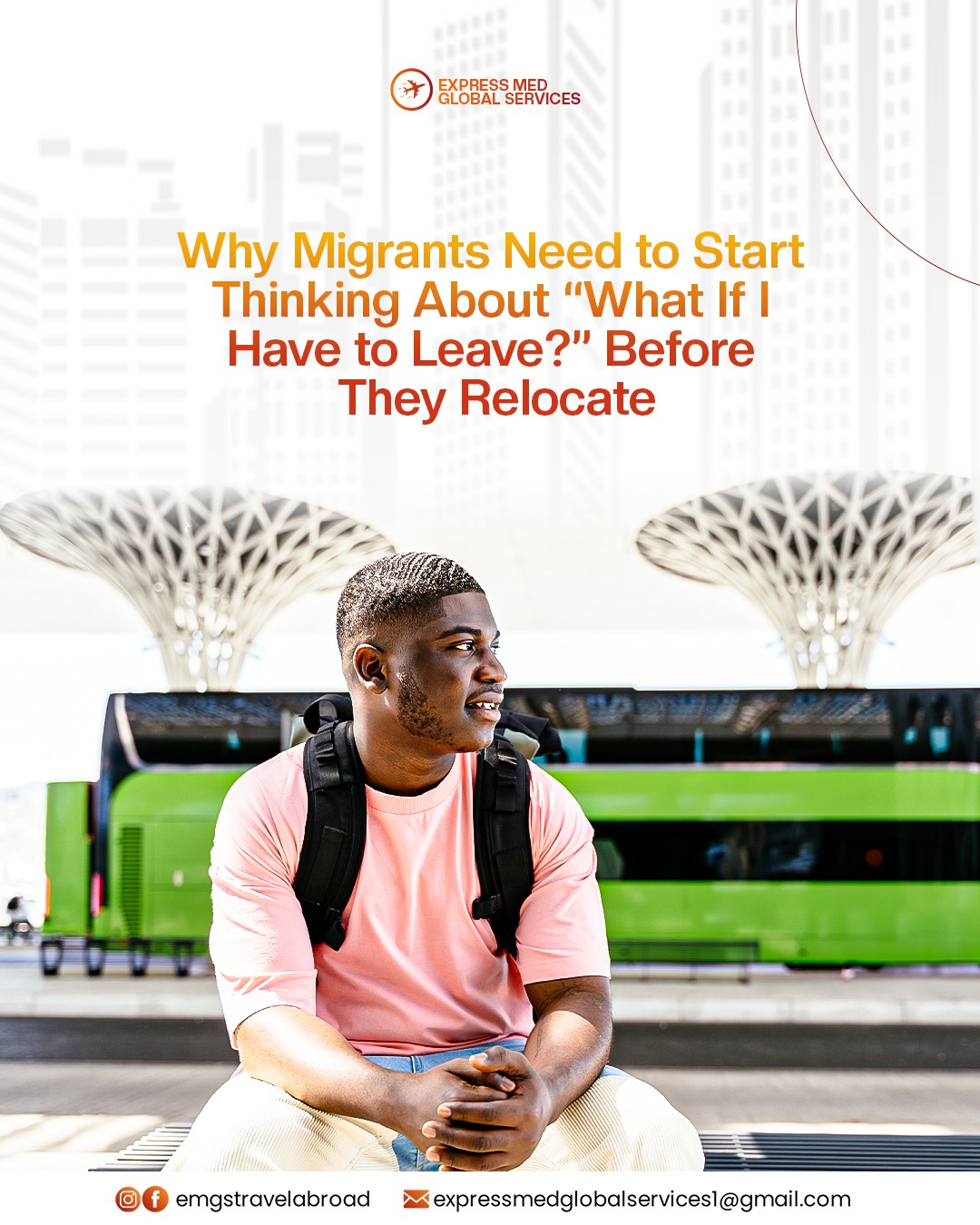
Why Migrants Need to Start Thinking About “What If I Have to Leave?” Before They Relocate
Most people plan their migration around one outcome: getting abroad and building a better life. But what happens if the job ends, the visa is not renewed, a family emergency changes everything, or staying becomes financially unsustainable? Thinking about these possibilities before relocating is not pessimism. For healthcare professionals investing heavily in an international career, it is part of building a migration plan that can withstand uncertainty.
Imagine spending three years preparing to leave Nigeria.
You complete your professional examinations, pay for document verification, secure registration, apply for jobs and finally receive an offer from an overseas hospital. You sell some belongings, make travel arrangements and use a significant portion of your savings to establish yourself in a new country.
For the first few months, everything feels worth it.
You settle into work, become familiar with the healthcare system and begin earning in a stronger currency. Perhaps you bring your family over after a while. You rent a better apartment, establish a routine and start making plans for the future.
Then something changes.
Your employer restructures and your position disappears. Your visa depends on your employment, and you cannot find another qualifying role within the time available. Alternatively, a family emergency makes it necessary to return home, or the cost of maintaining your life abroad becomes too high.
Suddenly, the future you spent years preparing for looks different.
This is not the outcome most migrants imagine when they begin planning their relocation. Yet it is a possibility worth considering before committing substantial money, time and emotional energy to a move.
A sound migration plan should explain not only how you intend to establish yourself abroad, but also what you will do if you can no longer stay.
Why leaving rarely features in migration plans
Migration planning naturally focuses on reaching the destination.
Which country offers the best opportunities? What qualifications are required? How much will the examinations cost? Which employers recruit internationally? How long will the visa process take?
These are necessary questions, particularly for healthcare professionals navigating registration requirements and competitive recruitment processes.
But the attention given to getting abroad can leave very little room for considering what might happen afterwards.
Part of the reason is emotional.
When someone has spent years working towards relocation, imagining a return can feel like undermining the entire effort. Family members may already expect financial support. Friends may see the move as proof of professional success. The migrant may have promised themselves that they will not return until they have achieved certain financial goals.
Leaving can begin to feel like an outcome that must never happen.
That mindset is understandable, but it can make people less prepared to respond when circumstances change.
Planning for a possible departure does not mean expecting your migration to fail. It means recognising that even a carefully planned career can encounter events outside your control.
Your visa may not provide the security you expect
One of the first things to consider is how your immigration status is connected to your ability to remain in the country.
Not every visa provides the same level of security. Some allow people to change employers relatively freely, while others tie permission to work to a particular employer, occupation or sponsorship arrangement. Some temporary visas also have limits on how long the holder can remain or what they can do after their employment ends.
For a healthcare professional on an employer-sponsored visa, losing a job can therefore create two separate problems.
The first is finding another source of income.
The second is determining whether they can continue living and working in the country legally.
These problems may need to be resolved within a limited period, depending on the destination's rules and the person's immigration circumstances.
A new job does not necessarily solve the problem immediately. The replacement employer may need to be an approved sponsor, the position may need to satisfy specific requirements, or the migrant may need to apply for updated immigration permission.
This is why it is important to understand your visa conditions before travelling, rather than relying on assumptions about what happens if your employment ends.
You should know what options exist if your job disappears, whether changing employers is possible, what deadlines might apply and when you may need qualified immigration advice.
The rules can vary significantly between countries and visa categories. Your plan should be based on the conditions that apply to your own situation.
An overseas career can become financially fragile even when the salary looks good
A healthcare salary abroad may appear substantial when converted into naira. But the amount you earn is not the same as the financial security you build.
Consider a professional earning a reasonable monthly salary but spending most of it on rent, transport, utilities, food, debt repayments and family support.
The remaining amount may be too small to cover several months without employment.
If the person loses their job, they could quickly face pressure to borrow money, depend on relatives or accept another position simply to keep earning.
For migrants whose immigration status is tied to employment, financial pressure and immigration pressure can reinforce each other.
They may have very little time to find another job, yet insufficient savings to support themselves while searching.
This is why your migration budget should account for more than examination fees, flights and the first month's rent.
It should also consider what happens if your income stops unexpectedly.
How many months of essential expenses could you cover? What would happen to your accommodation if you had to leave your job? Could you afford an emergency flight home? Would you still have outstanding relocation debts?
You may not be able to prepare for every possible expense, but understanding your financial exposure can help you make better decisions before relocating.
The money you invest in migration may not be recoverable
International migration can require substantial upfront spending.
You may pay for professional examinations, language tests, credential verification, registration, visa applications, medical examinations, travel and accommodation. You may also spend money on preparatory courses or recruitment-related expenses.
Some of these costs are unavoidable. Others may be recoverable under specific circumstances, depending on the terms and applicable rules.
But many expenses will not be refunded simply because your circumstances change.
If you return home after two years, you may still have benefited from the experience and income you earned abroad. However, you may not recover every naira spent preparing for the move.
The financial risk becomes greater when relocation is funded through loans or when family members contribute money with the expectation that you will repay them after securing employment.
Before migrating, separate the money you are investing in the move from the money you need to remain financially stable.
Avoid assuming that your overseas salary will automatically allow you to recover every cost within a particular period. Your actual savings will depend on living expenses, family responsibilities, employment conditions and unexpected events.
A migration plan becomes more resilient when it does not depend on everything going exactly as expected.
What happens to your family if you have to leave?
For professionals relocating alone, returning home can be disruptive.
For those who have moved with a spouse and children, the consequences can be more complicated.
Your spouse may have left a job in Nigeria. Your children may have started school abroad. Your family may have signed a tenancy agreement, purchased household items and established a new routine.
If your employment ends or your immigration circumstances change, you may need to make decisions that affect everyone.
Can your family remain in the country if your own immigration status changes? Would your spouse's employment or immigration permission be affected? What happens to your children's schooling? Could the family afford to relocate together, or would a temporary separation become necessary?
The answers depend on the destination country's rules and the family's individual circumstances.
These questions can feel uncomfortable to discuss before leaving, especially when everyone is excited about the move. But they are easier to consider calmly before a crisis occurs.
For families, a migration plan should include an understanding of how dependants' immigration status is linked to the main applicant, what happens if that status changes and what practical options exist if the family needs to relocate.
Returning home can be harder than people expect
It is tempting to assume that returning to Nigeria would be straightforward because it is familiar.
But several years abroad can change your circumstances considerably.
You may have lost contact with former colleagues. Your professional network may have moved on. The healthcare sector may have changed, and some of your previous experience may need to be explained in the context of local employers' expectations.
You may also return with financial commitments that continue even after your overseas income stops.
Perhaps you bought land, built a house or borrowed money to support relatives. Perhaps your family has become accustomed to the income you earned abroad.
Returning does not automatically erase those responsibilities.
There can also be an emotional adjustment. You may feel disappointed that your plans did not unfold as expected, or worry about how people will interpret your decision.
This is why maintaining professional relationships in Nigeria can be valuable even after you relocate.
Keep your qualifications and registration documents accessible. Maintain contact with trusted colleagues. Stay informed about developments in your profession. Understand what would be required to return to practice if you eventually needed to.
These steps do not mean dividing your attention between two countries. They preserve options you may be grateful to have later.
Your international experience can still have value if you return
One of the most damaging assumptions about migration is that returning home means losing everything you gained abroad.
That is not necessarily true.
A healthcare professional may return with experience of a different clinical system, exposure to new technologies, specialist training or stronger communication and leadership skills.
They may have learned how to work within different patient-safety procedures, contribute to quality-improvement projects or collaborate across multidisciplinary teams.
Those capabilities can remain valuable after relocation, although their usefulness will depend on the professional's role, the requirements of local employers and the extent to which the skills can be applied in the Nigerian healthcare system.
For example, a nurse who has gained experience in a specialist unit may be able to pursue related opportunities at home. A healthcare professional who has developed teaching or management skills may explore training or leadership roles.
Not every overseas qualification will automatically be recognised, and returning professionals may need to satisfy local registration requirements.
Still, the experience itself does not disappear when a visa expires or an employment contract ends.
The more deliberately you develop your skills abroad, the more likely it is that your experience will remain useful across different professional settings.
Do not build your entire career around one employer
This is particularly important for healthcare workers whose visas depend on sponsorship.
An employer may be reputable and the job may initially be an excellent fit. But organisations can restructure, reduce staffing, change management or withdraw from recruitment arrangements.
Even without those problems, you may eventually want a different role.
Your career should therefore extend beyond your current employment contract.
Maintain your professional registration and keep your records up to date. Document your clinical experience, training, certifications and achievements. Develop relationships with colleagues and professional networks outside your immediate workplace.
Understand which other employers recruit people with your skills and whether you could meet their requirements.
This does not mean preparing to resign every few months. It means ensuring that your professional identity is not entirely dependent on one organisation.
The ability to move to another suitable employer can make a difficult employment situation easier to manage, provided the move is compatible with your immigration conditions.
Be careful about making permanent financial commitments too early
Many migrants begin making major financial decisions shortly after securing an overseas job.
They may purchase property, commit to a mortgage, take on substantial debt or make large investments at home.
These decisions can be reasonable when they fit the person's income and long-term plans.
The risk comes from assuming that the current salary and immigration status will remain unchanged indefinitely.
A professional who takes on substantial monthly commitments may find it difficult to manage if their employment ends or they need to leave the country unexpectedly.
Before making a large financial commitment, consider whether you could continue meeting the payments if your income stopped for several months or fell significantly.
Think about the costs of maintaining property from abroad, the possibility of currency fluctuations and whether you have sufficient savings after making the initial payment.
You should also distinguish between money you can access quickly and assets that may take months or years to sell.
Owning property does not necessarily protect you against an immediate cash shortage.
Financial security involves having assets, but it also involves having enough accessible money to respond to unexpected changes.
Understand what happens if your professional plans change
Sometimes the reason for leaving is not a crisis.
You may discover that the country does not suit you.
The work may be less rewarding than you expected. The climate, social environment or distance from family may become difficult to manage. Your priorities may change after several years.
You may also decide that another country offers a better professional opportunity.
These are legitimate reasons to reconsider your plans.
But changing countries can introduce another set of registration, employment and immigration requirements.
Your professional registration in one destination may not automatically permit you to practise in another. Qualifications and experience may be assessed differently, and you may need additional examinations or language tests.
A visa that allows you to work in one country does not normally give you permission to work in another.
If you think you may eventually move again, it is worth understanding how your experience and qualifications could transfer to other systems.
That does not mean preparing separate migration applications for several countries at once. It means avoiding the assumption that your current destination is the only place where your professional skills could be useful.
A backup plan should be practical, not imaginary
Telling yourself that you can always return home is not, by itself, a complete contingency plan.
You need to understand what returning would actually involve.
Where would you live? What would it cost to travel? Would you have money available for immediate expenses? What would happen to your outstanding debts? Could you resume work in your profession, and what steps would be required?
If you have a family, would everyone return together? If not, what would determine whether a temporary separation was necessary or appropriate?
You should also understand your options if you want to remain abroad but need to change employers or immigration routes.
A practical plan does not require you to predict the future. It requires you to identify the decisions you might need to make and the resources those decisions would require.
For some people, that may mean building emergency savings. For others, it may involve maintaining a professional network at home, understanding visa conditions or ensuring that essential documents are available when needed.
The right preparations depend on your circumstances, but the objective is the same: to avoid being forced into major decisions without time, money or reliable information.
Your reason for migrating should determine your exit strategy
Not every migrant has the same objective.
Someone who wants to work abroad for three years, save money and return home has a different plan from someone seeking permanent residence and a long-term career in another country.
A professional pursuing specialist training may be willing to accept a temporary stay if the training provides sufficient value.
Someone relocating with young children may prioritise continuity of education and long-term residence security.
These differences matter because they influence how much risk a person is willing to accept.
If your objective is to save money and return, you may focus on how quickly you can recover relocation costs, build savings and avoid unnecessary financial commitments.
If your goal is permanent settlement, you may pay greater attention to the requirements for longer-term residence, the stability of your employment and the immigration conditions affecting your family.
If you are primarily interested in professional development, you may evaluate whether the experience will remain valuable even if you eventually leave.
Your plan should reflect the life you want to build, rather than assuming that every successful migration must end in permanent settlement.
When should you reconsider staying?
Not every difficult period abroad means it is time to leave.
The first months in a new country can be challenging. Adjusting to a different healthcare system, building friendships, managing expenses and being separated from family can take time.
Some difficulties improve as you become more established.
Others are signs that your current arrangement may not be sustainable.
Repeated financial losses, deteriorating working conditions, an unsuitable employment arrangement or a significant change in family circumstances may justify reassessing your plans.
Immigration uncertainty can also make it necessary to consider alternatives before a deadline becomes urgent.
When making such decisions, distinguish between a temporary problem and a structural one.
A difficult month may be manageable.
A job that consistently leaves you unable to meet essential expenses may require a different response.
A period of loneliness may improve as your social network develops.
An immigration route that no longer supports your long-term objectives may require careful reconsideration.
Where possible, evaluate the facts, understand your legal position and seek appropriate professional advice before deciding whether to stay, change jobs or leave.
Leaving should not have to mean starting from zero
The strongest migration plans preserve value across different outcomes.
If you remain abroad, your experience should continue building your career.
If you change employers, your professional records and skills should make the transition easier.
If you move to another country, your experience should help you understand what qualifications or recognition you need.
If you return to Nigeria, you should still have access to your credentials, financial records and professional contacts.
This is why it is useful to think of migration as a stage in your career rather than the only measure of success.
Your overseas job is one part of your professional life.
The skills you develop, the financial decisions you make and the relationships you maintain can continue to matter long after that particular job ends.
Plan for the future you want, but protect yourself against the future you cannot predict
There is nothing wrong with being ambitious about migration.
For many African healthcare professionals, relocating offers genuine opportunities for better training, professional development, financial progress and a different quality of life.
Preparing seriously for those opportunities is worthwhile.
But ambition becomes more sustainable when it is accompanied by realistic planning.
Understand your immigration conditions before relocating. Build a financial buffer where possible. Avoid commitments that depend on your salary remaining unchanged forever. Maintain your professional standing and keep your records accessible. Know what options may be available if your employment ends or your circumstances change.
And remember that returning home, moving elsewhere or changing your long-term plans does not automatically erase the value of your experience.
The point is not to expect your migration to fail.
It is to ensure that an unexpected change does not leave you without options.
A successful migration plan is not one in which leaving becomes impossible. It is one in which you have built enough professional, financial and personal resilience to make a sound decision, whether you stay or go.
Contact Us, click on this link https://selar.co/m/Express_Global to purchase any of our services or visit our website https://emgs.global/ — we're just a click away.
For CV, Supporting Statement, and Cover Letter: Chat this customer care number: +234 905 672 3938
Enjoyed this post? Like & share the knowledge!
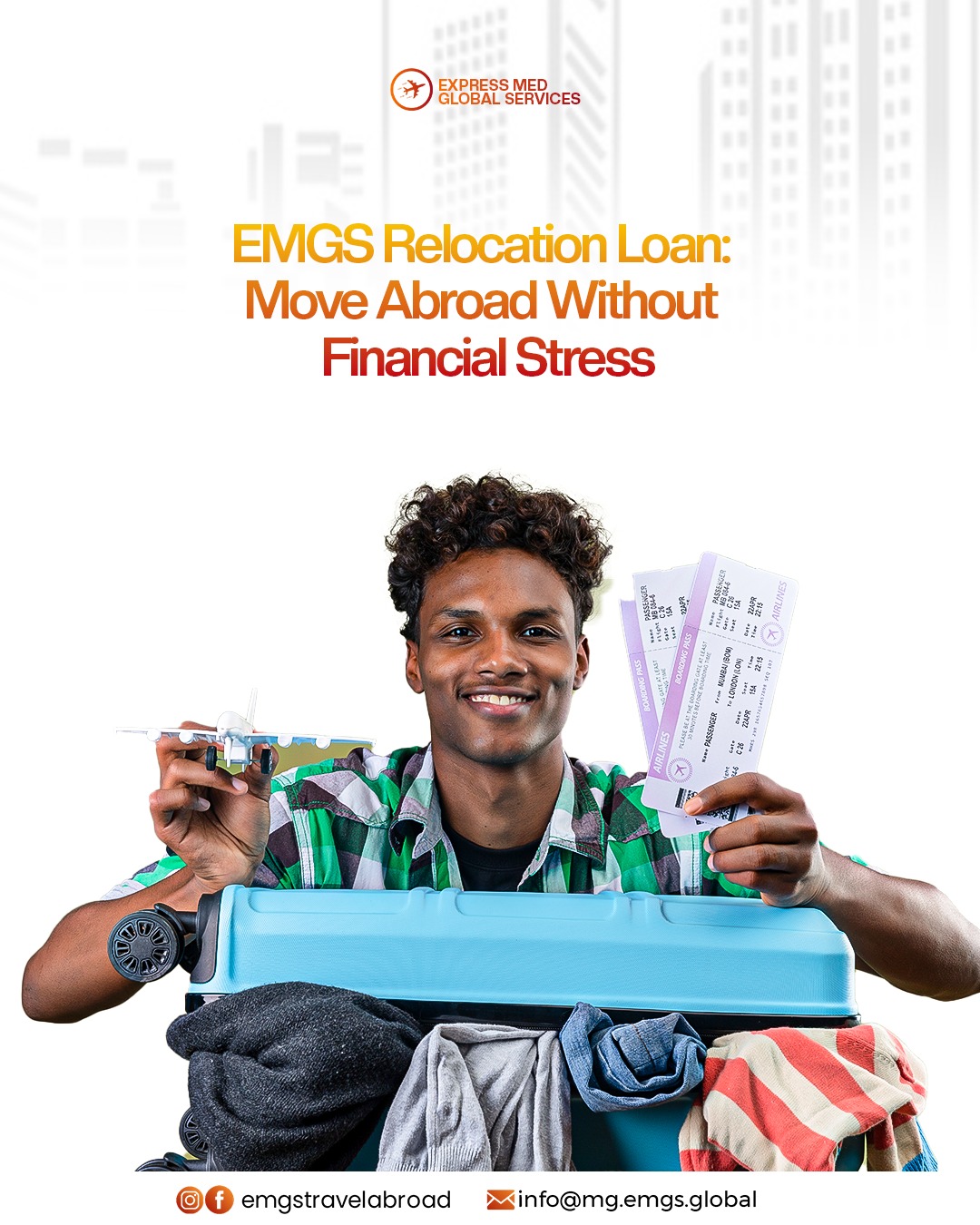
EMGS Relocation Loan: Move Abroad Without Financial Stress
EMGS Team
26th oct, 2026
“Look before you leap” is sensible advice, especially when the leap involves moving to another country. You can plan for the flight, prepare your documents, and calculate your major expenses, only to discover that getting settled requires a second budget you never knew you needed. Apparently, arriving is one expense; actually living there is another. You may have saved for your flight, paid your application fees, and arranged your visa. Then accommodation demands a deposit and advance rent. You need transport from the airport, groceries for the first few days, a local SIM card, and a few essentials your suitcase could not accommodate. Suddenly, the money you thought would see you through the move looks considerably smaller. This does not always mean you planned badly. Relocation involves several moving parts, and some costs become clear only as departure approaches or after arrival. Understanding the full financial picture can help you prepare more realistically. If a necessary expense leaves a funding gap, the EMGS Relocation Loan is one service you can inquire about.
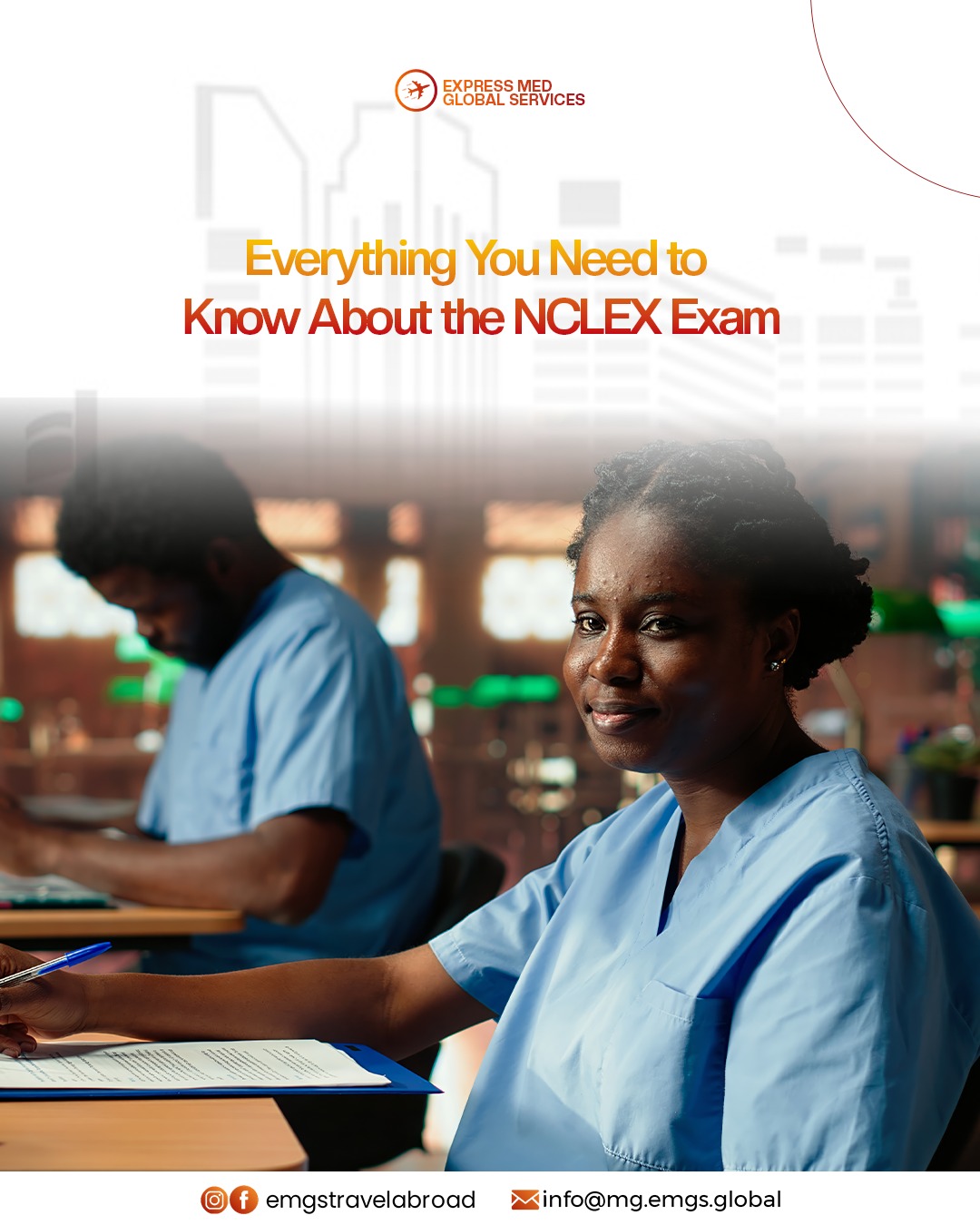
Everything You Need to Know About the NCLEX Exam (Continued)
EMGS Team
24th oct, 2026
Passing the NCLEX is an important milestone, but it is not the end of the process for nurses planning to work abroad. You still need to understand how results are issued, what to do if you do not pass, and which licensing, employment, and immigration steps apply to your destination. Rules differ across the United States, Canada, and Australia. This second part focuses on what happens after the exam, helping internationally educated nurses plan without assuming one result settles every requirement.
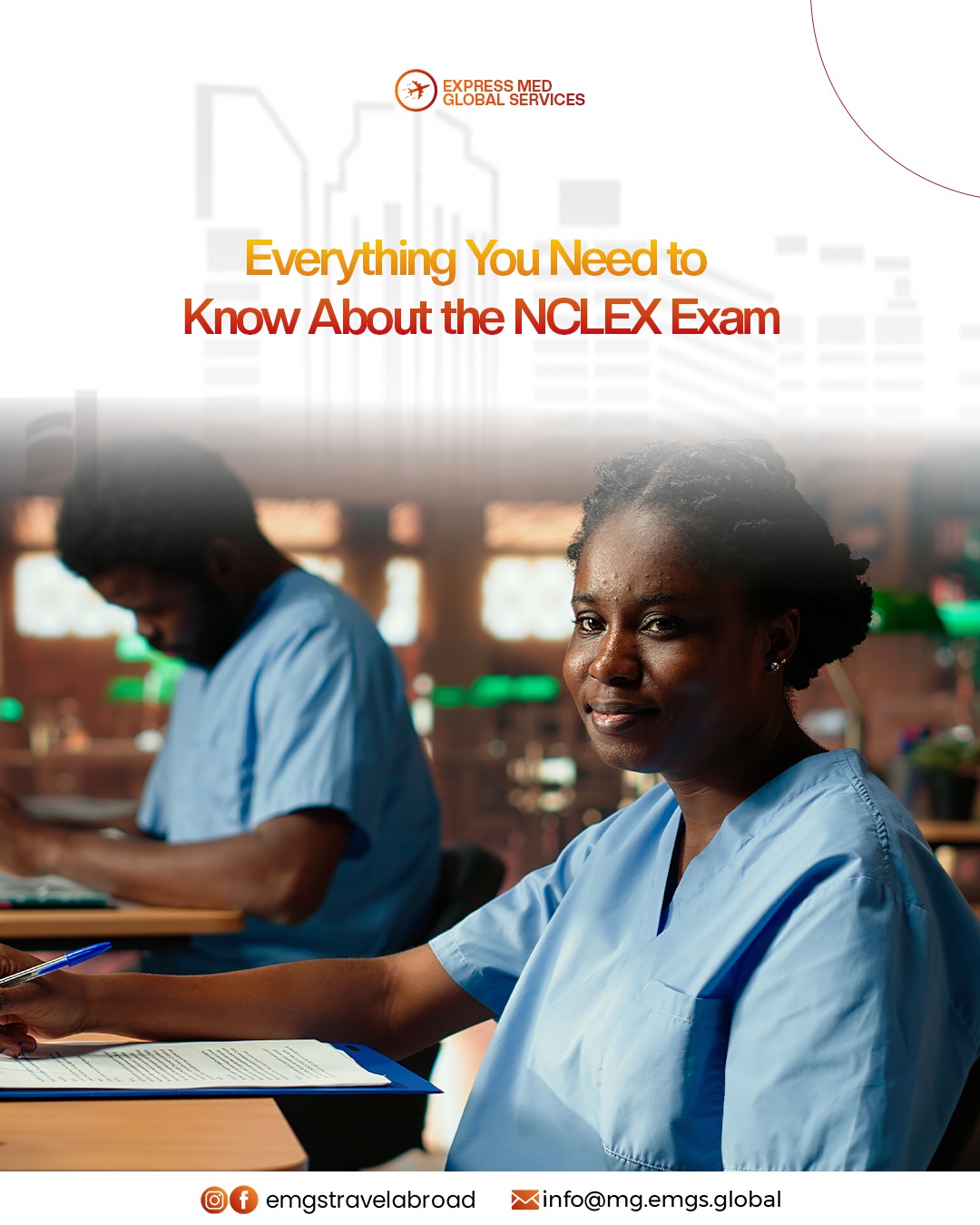
Everything You Need to Know About the NCLEX Exam
EMGS Team
23rd oct, 2026
During a clinical shift, nurses assess patients, review vital signs, and use the information available to decide what care is needed. The NCLEX tests that same kind of clinical judgment through examination questions, asking candidates to identify the safest and most appropriate response. The National Council Licensure Examination (NCLEX) helps nursing regulators determine whether candidates have the knowledge and judgment required for entry-level nursing practice. For internationally educated nurses planning to work abroad, understanding the examination, eligibility requirements, registration process, and costs can help them plan their next steps more confidently.