
EMGS Team
21st jul, 2026
0 reads
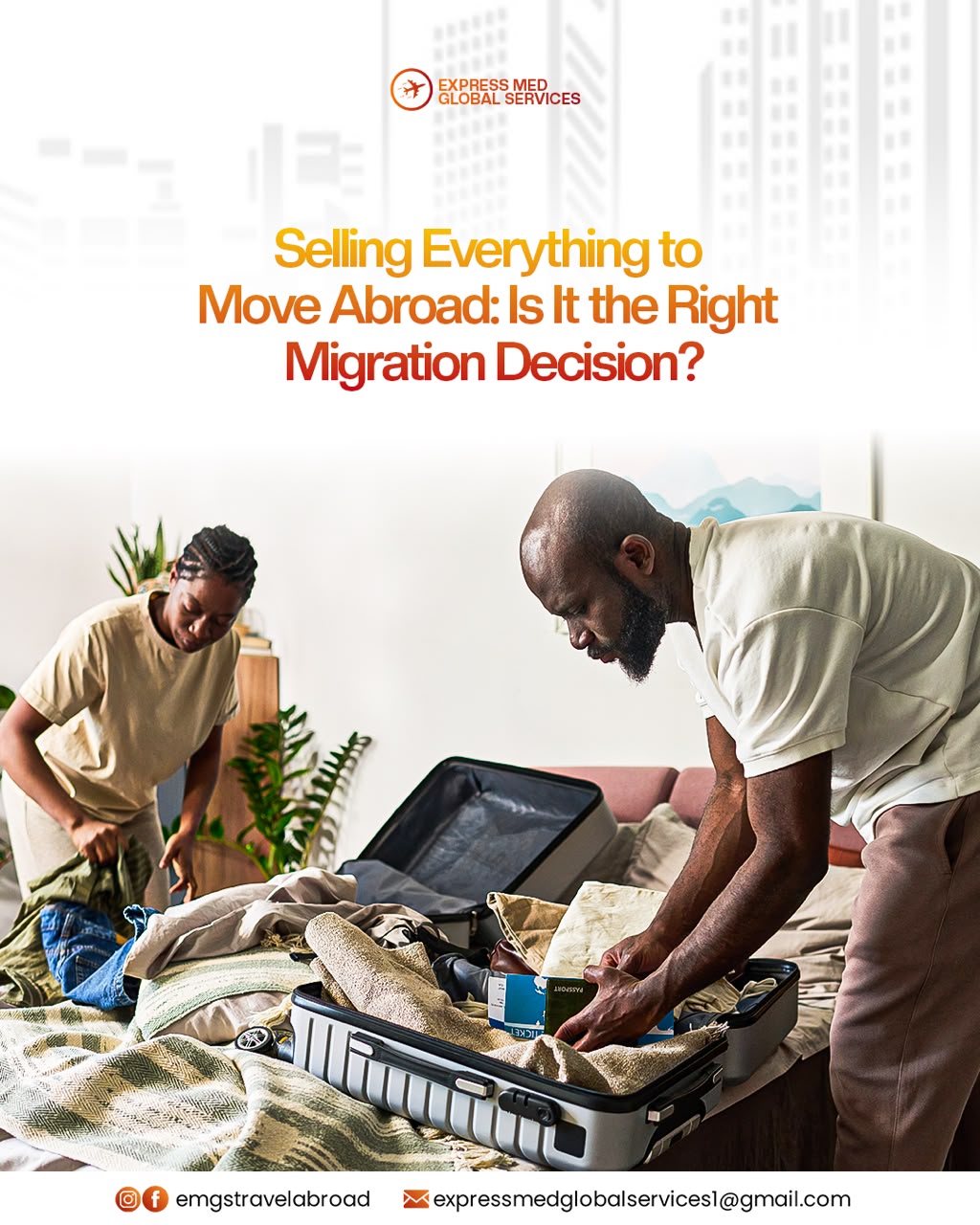
Selling Everything to Move Abroad: Is It the Right Migration Decision?
You've finally made up your mind. You want to leave Nigeria and build a new life abroad.
After months of researching countries, comparing migration pathways, speaking with professionals, and calculating the possible costs, the excitement begins to feel real then reality sets in.
Visa applications. Language tests. Professional registration. Flights. Accommodation. Settlement expenses.
Regardless of the destination, one thing becomes clear: relocating is expensive. Then a question starts to appear. Should I sell some of my belongings to make the move easier? Maybe the car. Maybe some furniture. Maybe business equipment, land, or other valuable possessions that took years to acquire.
For many people, selling assets feels like a necessary sacrifice for a better future. In some cases, it can provide the financial flexibility needed to start a new life.
But in other situations, selling too quickly can remove the very financial security that could have protected them if things did not go according to plan.
Migration rarely unfolds exactly as expected. Visa applications can be delayed or refused. Job opportunities can change. Immigration policies can be updated. Personal circumstances can shift.
Selling everything before relocating is not automatically right or wrong.
It depends on when you are selling, why you are selling, and what exactly you are giving up.
Understanding those differences can help you avoid one of the most expensive mistakes in your migration journey.
The Risk of Selling Before Your Migration Is Certain
One of the biggest misconceptions about migration is that deciding to leave means leaving is guaranteed.
Many prospective migrants begin spending money long before they receive a visa. Depending on their pathway, they may pay for language examinations, credential assessments, document verification, medical examinations, application fees, professional licensing, tuition deposits, and other preparation costs.
These expenses are often necessary. The challenge begins when applicants fund them by selling important assets before their migration plans are secure.
Imagine someone sells a vehicle used for business because they believe the money will help complete their migration process. Another person sells farmland that has provided income for years. Someone else sells inherited property because they are convinced they will soon be living abroad.
Now imagine the unexpected happens. The visa application takes longer than expected. The application is refused. A job opportunity disappears.
The person is still at home, but the asset that once provided financial stability is gone.
This does not mean people should never sell assets to finance migration. It means they should recognize that early migration decisions often come with uncertainty.
The less certain your pathway is, the more carefully you should approach decisions that cannot easily be reversed.
Not Every Stage of Migration Carries the Same Risk
"Moving abroad" can describe very different situations.
Someone who has only started exploring migration opportunities is in a completely different position from someone who has received visa approval, secured employment, arranged accommodation, and booked a flight.
The first person is still exploring possibilities. The second person has a much clearer path ahead.
Before selling a significant asset, consider:
- Have I received my visa approval?
- Is my employment confirmed?
- Do I have enough savings for unexpected expenses?
- What happens if my timeline changes?
- Would I still feel comfortable with this decision if I had to wait another year?
A decision that makes sense after your migration plans are established may not make sense when you are still at the early stages.
Some Assets Are More Than Possessions
Another mistake many people make is treating every asset as if it has the same value.
Selling old electronics or unused furniture is very different from selling a business, rental property, farmland, or family home.
Some possessions are easy to replace. Others represent years of effort, future income, or a safety net.
A property sold today may become significantly more expensive to purchase later. A business that is closed may take years to rebuild. An income-generating asset may continue supporting your family long after you relocate.
Some assets are not simply things you own. They are part of your financial foundation.
Before selling something significant, ask yourself:
If my migration plans changed within the next year, would I still be comfortable with this decision?
That question can prevent many rushed decisions.
Don't Let Migration Excitement Replace Financial Judgement
Migration often represents years of hope, sacrifice, and planning.
When an opportunity finally appears, it is natural to want to do everything possible to make it happen. However, excitement can sometimes create pressure.
Some applicants rush to sell because they fear losing an opportunity. Others accept the first buyer who offers cash, even when the price is below the true value of what they own.
The desire to leave can sometimes make people focus only on the destination while ignoring the financial journey required to get there.
Good migration planning should not be driven by panic. It should be driven by preparation.
Sometimes waiting longer, saving more, reducing costs, or exploring alternative funding options may be a better decision than immediately selling everything.
Think Beyond Getting Abroad
Many applicants plan carefully for the migration process itself. They calculate visa fees, flights, and application expenses.
But fewer people think deeply about the cost of building a new life after arrival.
Relocation involves more than reaching another country. A new home may require a deposit before your first salary. You may need to buy essential household items, adapt to a different transport system, pay professional licensing fees, or manage higher living costs while establishing yourself.
Many immigration authorities provide financial guidance to help applicants prepare realistically. For example, some Canadian immigration pathways require applicants to demonstrate settlement funds, while countries such as Ireland provide clear information about visa requirements and conditions before travel.
Understanding these costs before departure can reduce the pressure to make rushed financial decisions.
Family Responsibilities Should Be Part of the Decision
Migration decisions rarely affect only one person.
Many migrants continue supporting parents, spouses, children, or siblings after relocating. Others own businesses or properties that provide income for family members at home.
Selling those assets may solve one immediate challenge while creating another.
A shop may support a parent. A farm may provide seasonal income. A rental property may help cover family expenses.
These are not simply possessions. They may be part of a wider financial system that supports people who depend on you.
That does not mean such assets should never be sold. It means the decision should consider both your future abroad and the responsibilities that remain behind.
There Is No Universal Formula
Two applicants can receive similar migration opportunities and still make completely different financial decisions.
One person may sell many possessions because they have confirmed employment, strong savings, and little need for those assets after relocation.
Another may choose to preserve important property because it provides income, family support, or a safety net if circumstances change.
Neither decision is automatically right or wrong.
Good migration planning is not about copying another person's journey.
It is about understanding your own circumstances and making decisions that protect your future.
The EMGS Perspective
At Express Medical Global Services, we encourage applicants to approach relocation decisions with careful planning rather than emotion.
Selling assets before migration should never become an automatic response to receiving an opportunity. Applicants should consider the strength of their migration pathway, their financial position, their family responsibilities, and the realistic risks involved.
A successful migration journey is not only about reaching another country. It is about creating a stable future once you arrive.
Conclusion
Selling everything to move abroad is neither always the right decision nor always the wrong one.
The real question is not simply whether you should sell. It is whether this is the right time to sell.
If your migration plans are still uncertain, preserving important assets may provide valuable protection while you continue preparing.
If your plans are well established and your financial position is strong, selling selected possessions may help you transition more comfortably.
The key is to make decisions based on preparation rather than pressure. A visa can open the door to a new country.
It should not close the door on the financial security you have spent years building. Migration changes where you live. It should not remove every option you have if life takes an unexpected turn.
The best migration decisions are not only the ones that help you leave. They are the ones that help you thrive after you arrive.
Visa Application: +234 913 858 9678
CV and Support Letters: +234 905 672 3938
Job Application: +234 904 755 2504
NB: You can purchase EMGS travel and migration services here. You can also refer others and earn generously.
Contact us today to begin your relocation journey.
Enjoyed this post? Like & share the knowledge!
Similar Reads

The Reality of Moving Abroad: Does Relocation Mean Starting Over?
EMGS Team
23rd jul, 2026
One of the biggest fears people have about moving abroad isn't about visas alone. It is the fear of losing everything they have spent years building. The career. The reputation. The professional network. The confidence that comes from knowing how things work. Many prospective migrants ask the same question: "Will I have to start all over again?" The honest answer is more complicated than a simple yes or no. For some people, relocation feels like pressing the reset button. They arrive in a new country and discover that employers expect local experience, professional licensing may be required, and the network they spent years building no longer exists. At the same time, they are not truly starting from zero. Their education, work experience and technical skills still matter. Their discipline, and professional maturity do not disappear simply because they crossed a border. Understanding what actually changes after relocation and what does not, can help migrants prepare more realistically and make better long-term decisions.

Sponsored Jobs Abroad: Are Doctors and Nurses the Only Professionals Wanted?
EMGS Team
22nd jul, 2026
Spend just a few minutes searching for visa-sponsored jobs abroad and you could easily reach the wrong conclusion. Doctors. Nurses. Care workers ... Scroll a little longer and it can begin to feel as though every employer willing to sponsor an international worker is recruiting from the healthcare sector. If you're an engineer, accountant, software developer, electrician, chef, teacher, or construction professional, you may start wondering whether you've chosen the wrong career for migration. The good news is that you probably haven't. Healthcare receives much of the attention because it has one of the world's most visible labour shortages. However, it is far from the only sector where employers recruit internationally. The real question is not whether sponsored jobs exist outside healthcare. The real question is whether your skills solve a problem that another country's labour market is trying to address. Understanding that difference can completely change the way you approach your migration journey.
Moving Abroad Without a Job Offer: Which Countries Allow Skilled Workers to Apply?
EMGS Team
22nd jul, 2026
If you've been waiting for a job offer before taking your migration plans seriously, you may be waiting longer than necessary. Many skilled professionals believe international migration follows only one formula: get hired first, receive sponsorship, then relocate. That assumption is understandable because many of the world's best-known work visa programmes are employer sponsored. Spend enough time searching job boards, reading migration forums, or scrolling through social media, and it can begin to feel as though no employer means no opportunity. Several countries operate skilled migration pathways that allow eligible applicants to begin their immigration journey without first securing employment. Rather than asking, "Who has hired you?" , these programmes ask different questions. What qualifications do you have? How much skilled work experience have you gained? Can you communicate effectively in the country's language? Will your skills contribute to the economy over the long term? This does not mean you can arrive without a plan or expect employment to happen automatically. It simply means that for some skilled workers, migration can begin before the first employment contract is signed. Understanding how these pathways work can help you choose a strategy that matches your qualifications instead of assuming employer sponsorship is your only option.