
EMGS Team
18th feb, 2026
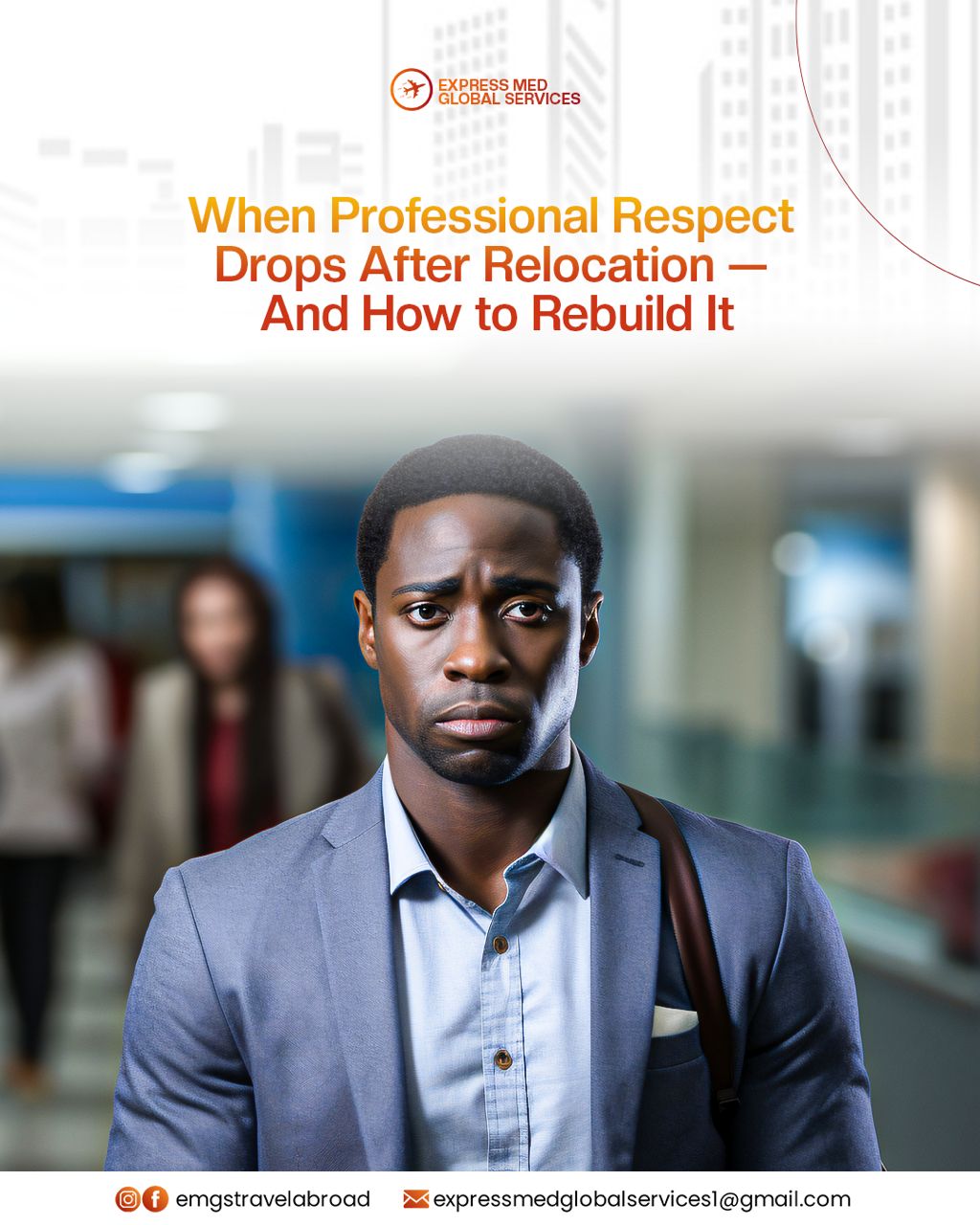
When professional respect drops after relocation — and how to rebuild it
Many African doctors, nurses, and allied health professionals experience a subtle drop in professional respect after relocating abroad — even when they are clinically strong. This piece explores why status resets happen, how bias and cultural fluency affect perception, and practical strategies for rebuilding authority, credibility, and confidence in a new healthcare system.
The quiet status reset
Relocation doesn’t just change geography. It resets status. Back home, you may have been: - A senior registrar - A consultant-in-training - A ward leader - The “go-to” clinician in your department You had contextual authority. People knew your training background. Your accent was neutral. Your cultural cues were understood. Abroad, none of that transfers automatically. You are re-evaluated — not just clinically, but socially. Your credentials are scrutinised differently. Your communication style is measured against local norms. Your authority is assessed through a new cultural lens. Even if you are highly competent, you may be treated like someone who needs proving. That status reset can feel like disrespect. Sometimes it is. Sometimes it’s unfamiliarity. Often, it’s both.
Why this hits African professionals harder
Several factors compound the experience: 1. Accent bias and communication style In many Western systems, authority is closely tied to communication fluency within local norms. If you: - Speak more formally - Pause to structure thoughts - Use terminology slightly differently - Avoid overly assertive tones …you may be misread as uncertain. Meanwhile, colleagues who sound culturally native are perceived as more confident — even when their clinical reasoning is similar. Over time, repeated micro-misreadings erode perceived authority. 2. Racial and cultural visibility Let’s be honest. African professionals are often visibly different in departments where leadership is less diverse. Even without overt discrimination, unconscious bias influences how authority is received. Patients may question you more. Colleagues may double-check your instructions more frequently. You may need to demonstrate competence repeatedly in ways others do not. That repetition is exhausting. 3. Hierarchical culture shock In many African hospitals, professional hierarchies are clearly defined. Titles matter. Seniority is respected overtly. In some host countries, hierarchies are flatter — but not always equally. The informality can blur boundaries. A junior nurse may challenge you casually. A trainee may address you by first name in contexts where you would expect formality. What feels like disrespect to you may be cultural normalisation to them. But perception still matters.
The internal impact no one prepares you for
When professional respect feels unstable, several things happen internally: - You speak less in meetings - You over-prepare before contributing - You avoid leadership roles - You hesitate to correct colleagues - You second-guess clinical decisions You begin shrinking slightly — not because you lack skill, but because the social feedback loop feels uncertain. Left unchecked, this can affect career trajectory.
Rebuilding professional respect deliberately
Respect rarely returns automatically. It must be rebuilt strategically — not emotionally. Here’s what we consistently observe among African medical professionals who successfully reposition themselves: 1. Master local fluency, not just clinical knowledge Clinical competence is assumed. Cultural fluency is noticed. Study: - How senior consultants phrase disagreement - How confident colleagues structure their input - When interruptions are tolerated — and when they aren’t - How authority is signalled verbally This isn’t about losing identity. It’s about learning dialect. When your communication aligns with local confidence cues, perception shifts. 2. Claim visible responsibility early Respect grows when your role becomes visibly linked to outcomes. Volunteer for: - Quality improvement projects - Teaching sessions - Audit presentations - Departmental committees Documented leadership builds institutional credibility. When your name is attached to measurable outcomes, informal doubts decrease. 3. Stop waiting to “feel ready” Many African professionals wait until confidence returns before stepping forward. In reality, stepping forward often rebuilds confidence. Apply for acting roles. Present cases. Ask to lead small initiatives. Authority strengthens through visible participation — not silent excellence. 4. Correct gently but consistently If you are spoken over, interrupted, or subtly dismissed, silence reinforces the pattern. You don’t need confrontation. You need calibration. Simple responses like: “I’d like to finish that point.” “As I was saying earlier…” “Let’s revisit the recommendation.” Signal authority without aggression. Consistency reshapes perception. 5. Separate bias from growth areas Not every moment of friction is discrimination. Not every discomfort is personal. Part of rebuilding respect is honest assessment: - Where do I genuinely need to adapt? - Where is bias influencing perception? Improving the former strengthens your foundation. Recognising the latter protects your self-esteem. 6. Secure structural stability Permanent residency, senior licensing milestones, and institutional backing shift power dynamics. When your immigration status is stable and your credentials are fully recognised, your posture changes. You negotiate differently. You speak differently. Leverage affects tone.
The long view
Professional respect abroad is rarely immediate. It builds in layers: - Competence - Cultural fluency - Institutional credibility - Visibility - Stability The early dip many African medical professionals feel is not a verdict on ability. It is a transitional phase between contextual authority (home) and earned authority (abroad). Those who understand this rebuild faster.
The quiet truth
Relocation humbles even the experienced. But respect is not permanently lost. It is recalibrated. And when African doctors, nurses, and allied health professionals combine clinical excellence with cultural fluency and strategic visibility, they often command deeper respect than they did before migration. Not because they demanded it. Because they positioned for it. And positioning, over time, reshapes perception. Contact Us, click on this link https://selar.co/m/Express_Global to purchase any of our services or visit our website https://emgs.global/ — we're just a click away. For CV, Supporting Statement, and Cover Letter: Chat this customer care number: +234 905 672 3938
Similar Reads

The Reality of Planning a Permanent Life vs “Just Staying for Now”
11th may, 2026
Why burnout abroad feels different from burnout back home
24th feb, 2026

EU Migration and Asylum Strategy for 2026: Safe Country Lists and Enhanced Return Powers Shaping Europe’s Borders
23rd feb, 2026
The Reality of Planning a Permanent Life vs “Just Staying for Now”
EMGS Team
11th may, 2026
One of the quietest tensions in migration is this: On paper, you are building a life abroad. But emotionally, you may still be “just staying for now.” And those two mindsets shape your decisions in very different ways.
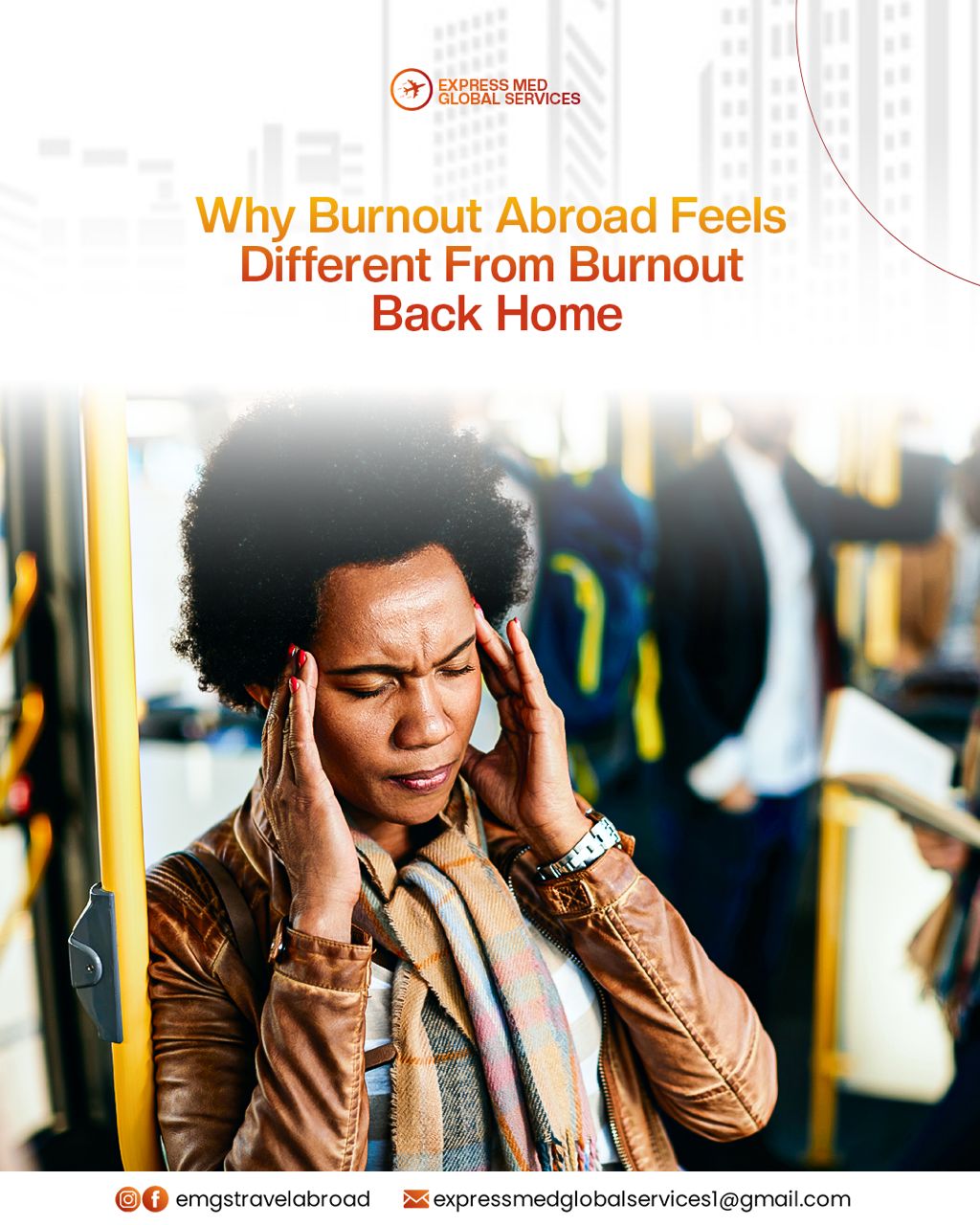
Why burnout abroad feels different from burnout back home
EMGS Team
24th feb, 2026
Burnout doesn’t disappear after relocation — it simply changes form. Many African health workers abroad find themselves exhausted in ways that feel more psychological than physical. This article explores why burnout in structured, high-accountability systems feels different from burnout back home, and how identity shifts, performance pressure, and expanded responsibilities quietly shape the experience.
EU Migration and Asylum Strategy for 2026: Safe Country Lists and Enhanced Return Powers Shaping Europe’s Borders
EMGS Team
23rd feb, 2026
Europe’s asylum landscape is changing fast in 2026.