
EMGS Team
16th jul, 2026
0 reads
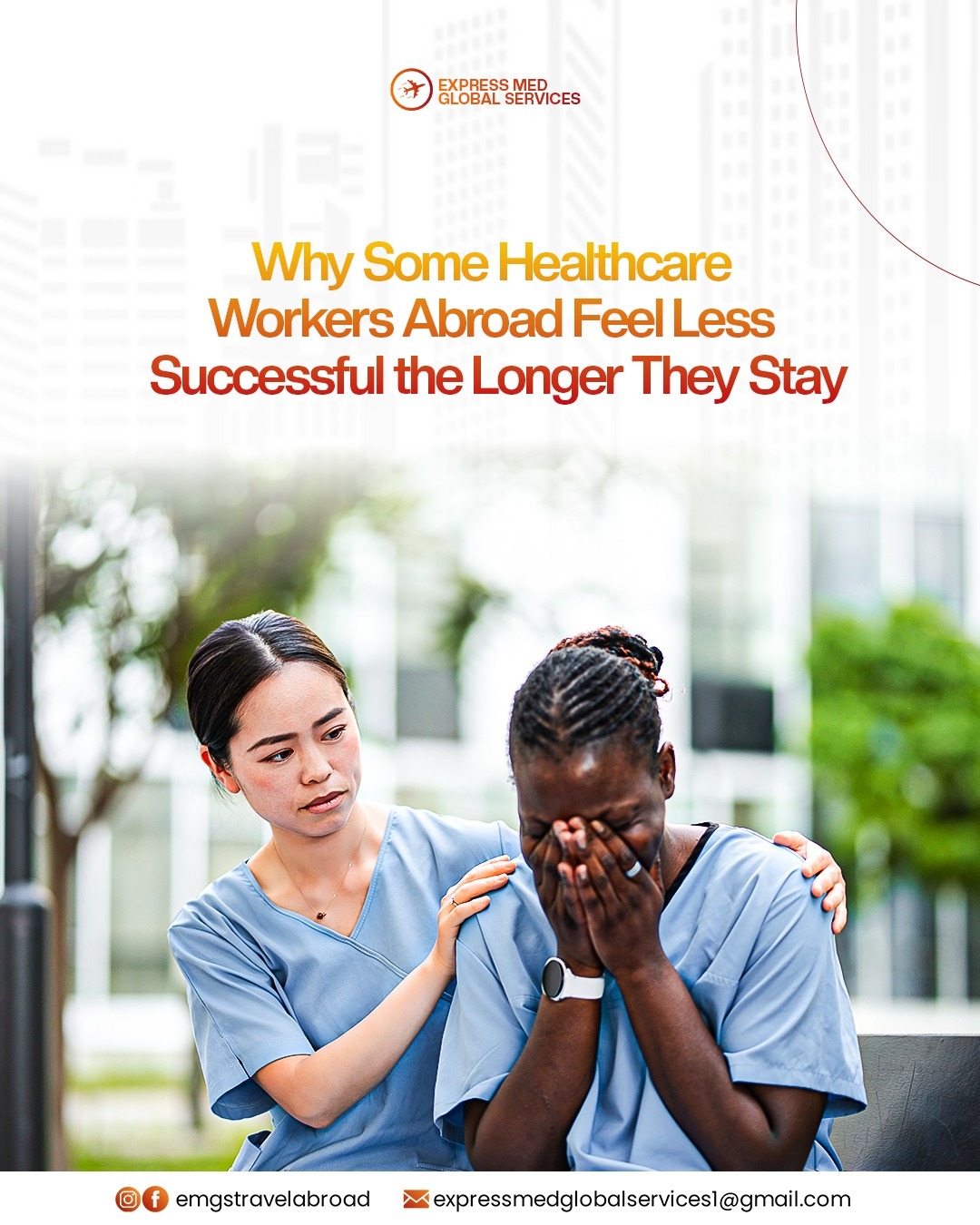
Why Some Healthcare Workers Abroad Feel Less Successful the Longer They Stay
Many African healthcare workers expect life abroad to feel more rewarding as the years go by. Yet for some, the opposite happens—they become more accomplished on paper while feeling less successful personally. This article explores why long-term migrants sometimes lose sight of their progress, how changing expectations and constant comparison reshape their definition of success, and why recognising how far you've come is just as important as planning where you want to go next.
When many African healthcare workers first relocate abroad, success feels surprisingly easy to measure.
Getting your licence approved feels like success.
Landing your first job feels like success.
Receiving your first salary feels like success.
Finding a place to live.
Learning how the healthcare system works.
Completing your probation period.
Everything feels like progress because every milestone represents something you once worked incredibly hard to achieve.
During those early months, it's easy to feel like your life is moving in the right direction.
Then something unexpected happens.
A few years pass.
The milestones become less frequent.
Life becomes more ordinary.
And despite earning more, becoming more experienced, and building a stable life, some healthcare workers begin feeling less successful than they did when they first arrived.
It sounds contradictory.
After all, their lives have improved in many measurable ways.
So why does success begin to feel more distant instead of closer?
The answer has less to do with what they've achieved and more to do with how success changes over time.
The finish line keeps moving
Before relocating, success has a clear definition.
Pass IELTS or OET.
Complete your licensing exams.
Secure sponsorship.
Get your visa approved.
Board the flight.
Start working.
Every goal has a visible endpoint.
Each achievement brings a sense of accomplishment because you know exactly what you're working towards.
But once you've settled abroad, those clear milestones begin to disappear.
Instead, life becomes open-ended.
Should you specialise?
Move into management?
Buy a house?
Start a business?
Pursue permanent residency?
Return home someday?
There's no single roadmap anymore.
And without a clearly defined destination, it's easy to mistake uncertainty for lack of progress.
Your definition of success quietly changes
Migration has a way of expanding people's ambitions.
Back home, working in a reputable hospital abroad may have seemed like the ultimate goal.
Once you achieve it, your perspective shifts.
Now you're thinking about promotions.
Leadership.
Property ownership.
Investments.
Financial independence.
Career flexibility.
The problem isn't having bigger dreams.
It's forgetting to acknowledge how far you've already come.
Each time you reach one goal, another immediately takes its place.
Instead of celebrating your progress, your mind becomes occupied with the next achievement.
Without realising it, success becomes something that always feels one step away.
You stop comparing yourself to where you came from
One reason the early years abroad feel encouraging is because you're comparing your present with your past.
You're seeing clear improvement.
Better income.
New opportunities.
International experience.
Greater professional exposure.
Over time, however, many migrants stop making that comparison.
Instead, they begin comparing themselves with people around them.
The colleague who became a clinical lead.
The friend who bought a second property.
The former classmate who now works in healthcare technology.
The nurse who moved into advanced practice.
Without noticing it, your reference point changes.
Instead of measuring your growth against where you started, you begin measuring it against someone else's current position.
That shift alone can make even significant achievements feel ordinary.
Stability can feel strangely invisible
Human beings naturally notice change more than consistency.
The excitement of a new job is obvious.
The value of keeping that job for five years is less visible.
Receiving permanent residency feels like a milestone.
Quietly maintaining a stable career, healthy finances, and professional reputation over the next decade rarely receives the same recognition.
Yet long-term stability is one of the hardest things to build.
Especially as a migrant.
Remaining employed.
Continuing professional development.
Supporting family.
Managing finances.
Protecting your mental health.
Building meaningful relationships.
These aren't dramatic achievements.
But they are remarkable accomplishments.
Unfortunately, because they happen gradually, they're easy to overlook.
The people back home see success differently
Interestingly, many healthcare workers abroad feel unsuccessful while their families back home see them as incredibly successful.
Parents see stability.
Friends see opportunity.
Relatives see international experience.
Meanwhile, the migrant sees unfinished goals.
More qualifications still to complete.
Savings that don't feel sufficient.
Career ambitions not yet realised.
Neither perspective is entirely wrong.
The difference is that people outside your journey often see how far you've travelled.
You're focused on how much further you believe you still have to go.
Burnout can distort your view of achievement
Healthcare is demanding everywhere.
Long shifts.
Staff shortages.
Emotional labour.
Night duties.
High patient expectations.
When you're physically and emotionally exhausted, it's difficult to appreciate your own progress.
Burnout narrows your perspective.
Instead of recognising years of growth, you begin focusing only on what's still difficult.
You feel behind.
Stuck.
Unfulfilled.
Sometimes the problem isn't a lack of success.
It's a lack of recovery.
Rest has a remarkable way of restoring perspective.
When people feel healthier, they often recognise achievements they had stopped noticing.
Success without purpose eventually feels empty
Another reason some healthcare workers feel less successful over time is that they confuse career progression with personal fulfilment.
Promotions are valuable.
Higher salaries matter.
Professional recognition is important.
But if work becomes the only measure of success, dissatisfaction often follows.
Many experienced migrants eventually discover they also need meaningful friendships.
Time with family.
Personal interests.
Community.
Faith.
Travel.
Opportunities to contribute beyond their job.
A well-rounded life often creates a stronger sense of fulfilment than career achievements alone.
Migration makes this lesson particularly important because work can easily become the centre of everything.
The danger of always postponing satisfaction
Some migrants develop a habit of delaying contentment.
"I'll feel successful after I become a senior nurse."
"After I buy a house."
"After I get citizenship."
"After I finish my master's degree."
Those goals are worthwhile.
But satisfaction that is constantly postponed has a habit of remaining permanently out of reach.
Every achievement simply creates another condition for happiness.
Learning to appreciate progress while still pursuing growth is one of the healthiest financial and emotional habits a migrant can develop.
The two are not opposites.
You can remain ambitious while also recognising that you've already achieved something extraordinary.
Look back before you look ahead
Every so often, it's worth asking yourself a different question.
Not,
"What haven't I achieved yet?"
But,
"What would the version of me from five years ago think about the life I'm living today?"
For many healthcare workers, the answer is humbling.
The person who once dreamed of working abroad would probably be amazed.
Not because life became perfect.
But because opportunities that once felt impossible are now part of everyday life.
That perspective doesn't remove future ambitions.
It simply reminds you that progress deserves recognition too.
Success is more than the next milestone
Migration has a way of teaching people to keep striving.
That determination is one of the reasons so many African healthcare workers build remarkable careers abroad.
But determination can become exhausting if it never allows room for appreciation.
The goal of relocating wasn't simply to spend decades chasing the next achievement.
It was to create a life with greater opportunity, stability, and possibility.
Sometimes success looks like a promotion.
Sometimes it looks like finally sleeping well after years of uncertainty.
Sometimes it looks like having enough financial security to say no to endless overtime.
Sometimes it looks like watching your children grow up in a stable environment.
Success evolves.
And that's not a sign that you've lost your way.
It's a reminder that growth changes what matters.
The challenge is making sure your definition of success grows without erasing everything you've already accomplished.
Because if every milestone immediately becomes ordinary, you'll spend your entire migration journey feeling as though you're falling behind.
When the truth may be that you've been quietly building the very life you once prayed for.
Contact Us, click on this link https://selar.co/m/Express_Global to purchase any of our services or visit our website https://emgs.global/ — we're just a click away.
For CV, Supporting Statement, and Cover Letter: Chat this customer care number: +234 905 672 3938
Enjoyed this post? Like & share the knowledge!
Similar Reads

The Reality of Moving Abroad: Does Relocation Mean Starting Over?
EMGS Team
23rd jul, 2026
One of the biggest fears people have about moving abroad isn't about visas alone. It is the fear of losing everything they have spent years building. The career. The reputation. The professional network. The confidence that comes from knowing how things work. Many prospective migrants ask the same question: "Will I have to start all over again?" The honest answer is more complicated than a simple yes or no. For some people, relocation feels like pressing the reset button. They arrive in a new country and discover that employers expect local experience, professional licensing may be required, and the network they spent years building no longer exists. At the same time, they are not truly starting from zero. Their education, work experience and technical skills still matter. Their discipline, and professional maturity do not disappear simply because they crossed a border. Understanding what actually changes after relocation and what does not, can help migrants prepare more realistically and make better long-term decisions.
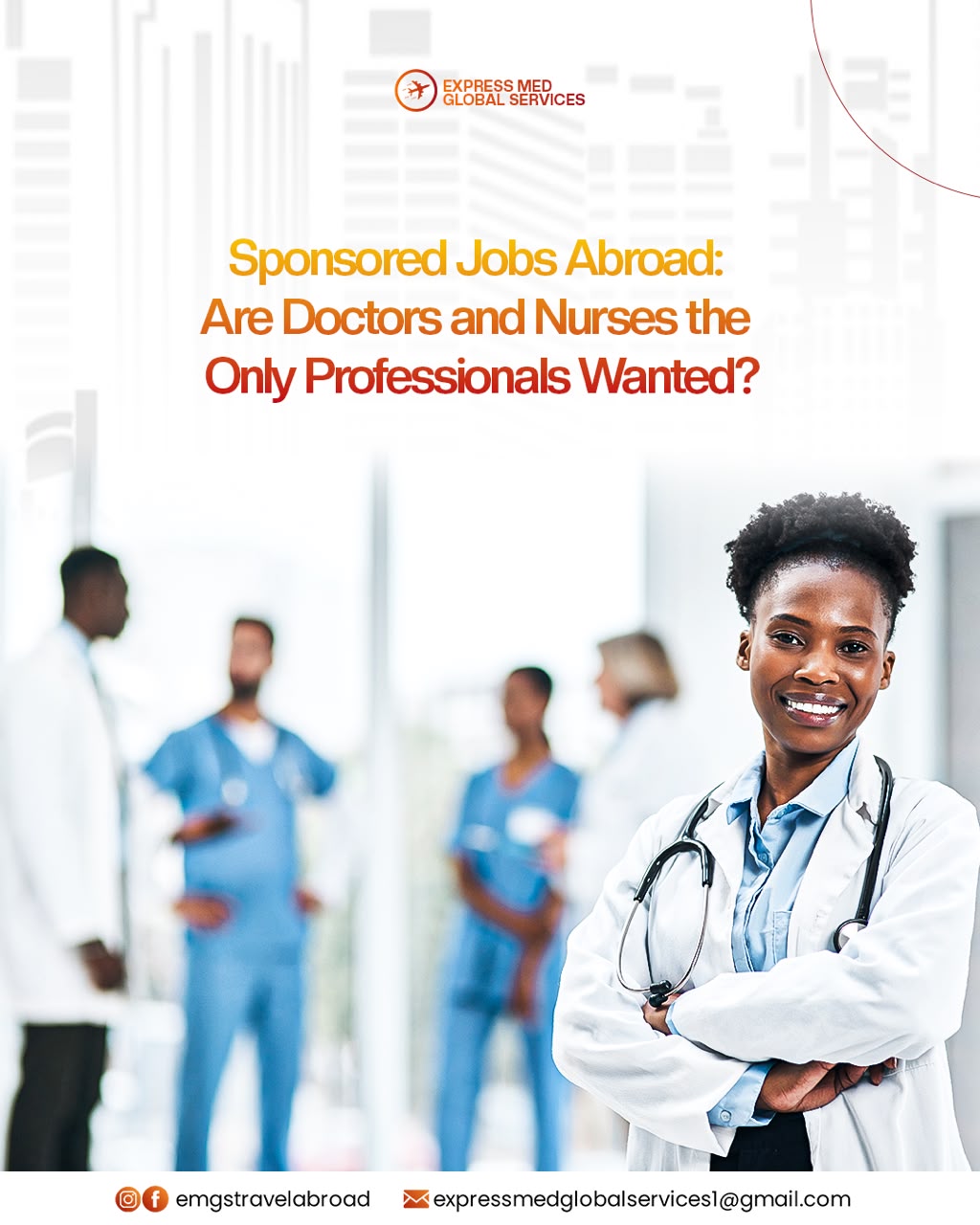
Sponsored Jobs Abroad: Are Doctors and Nurses the Only Professionals Wanted?
EMGS Team
22nd jul, 2026
Spend just a few minutes searching for visa-sponsored jobs abroad and you could easily reach the wrong conclusion. Doctors. Nurses. Care workers ... Scroll a little longer and it can begin to feel as though every employer willing to sponsor an international worker is recruiting from the healthcare sector. If you're an engineer, accountant, software developer, electrician, chef, teacher, or construction professional, you may start wondering whether you've chosen the wrong career for migration. The good news is that you probably haven't. Healthcare receives much of the attention because it has one of the world's most visible labour shortages. However, it is far from the only sector where employers recruit internationally. The real question is not whether sponsored jobs exist outside healthcare. The real question is whether your skills solve a problem that another country's labour market is trying to address. Understanding that difference can completely change the way you approach your migration journey.
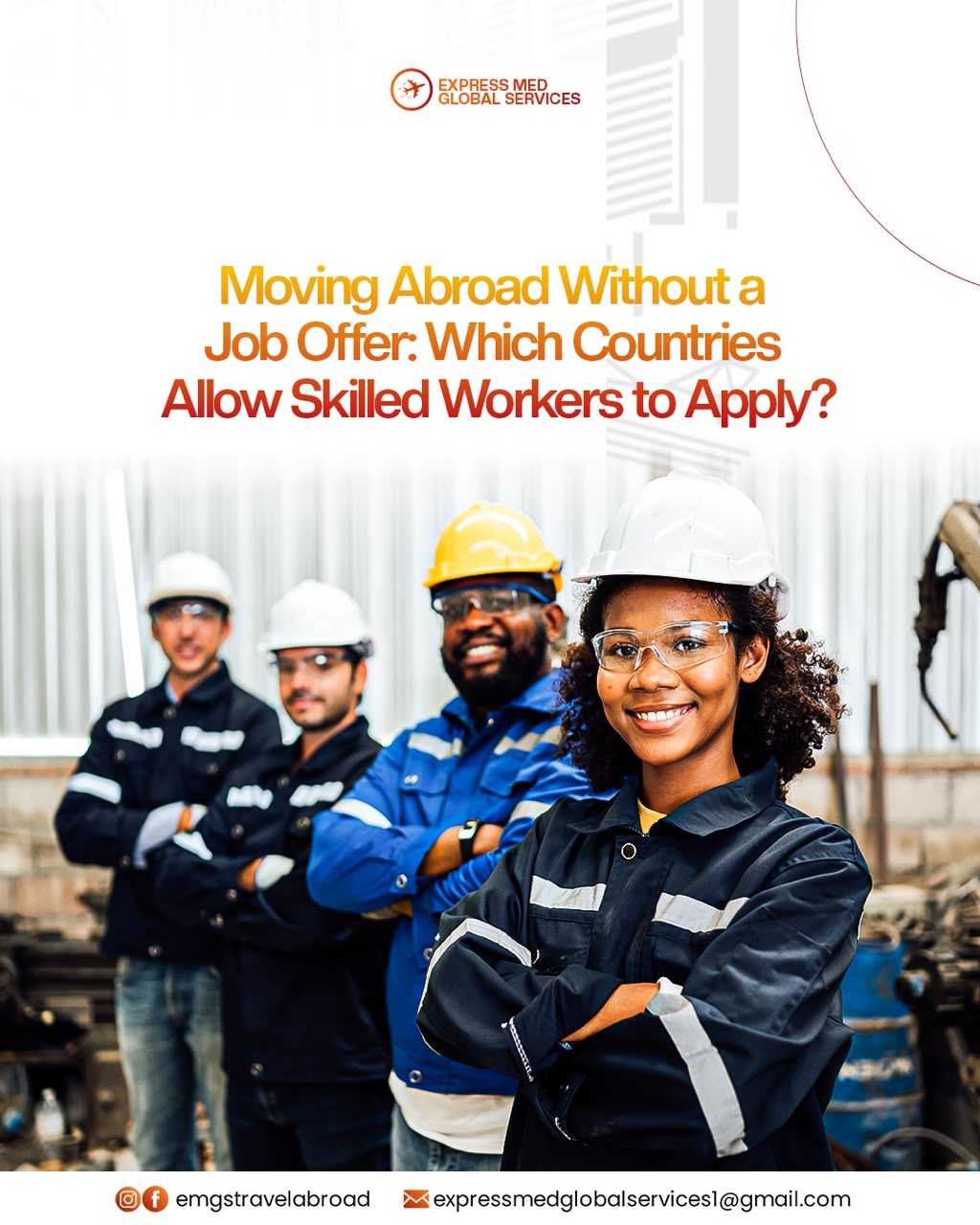
Moving Abroad Without a Job Offer: Which Countries Allow Skilled Workers to Apply?
EMGS Team
22nd jul, 2026
If you've been waiting for a job offer before taking your migration plans seriously, you may be waiting longer than necessary. Many skilled professionals believe international migration follows only one formula: get hired first, receive sponsorship, then relocate. That assumption is understandable because many of the world's best-known work visa programmes are employer sponsored. Spend enough time searching job boards, reading migration forums, or scrolling through social media, and it can begin to feel as though no employer means no opportunity. Several countries operate skilled migration pathways that allow eligible applicants to begin their immigration journey without first securing employment. Rather than asking, "Who has hired you?" , these programmes ask different questions. What qualifications do you have? How much skilled work experience have you gained? Can you communicate effectively in the country's language? Will your skills contribute to the economy over the long term? This does not mean you can arrive without a plan or expect employment to happen automatically. It simply means that for some skilled workers, migration can begin before the first employment contract is signed. Understanding how these pathways work can help you choose a strategy that matches your qualifications instead of assuming employer sponsorship is your only option.