
EMGS Team
24th jul, 2026
0 reads
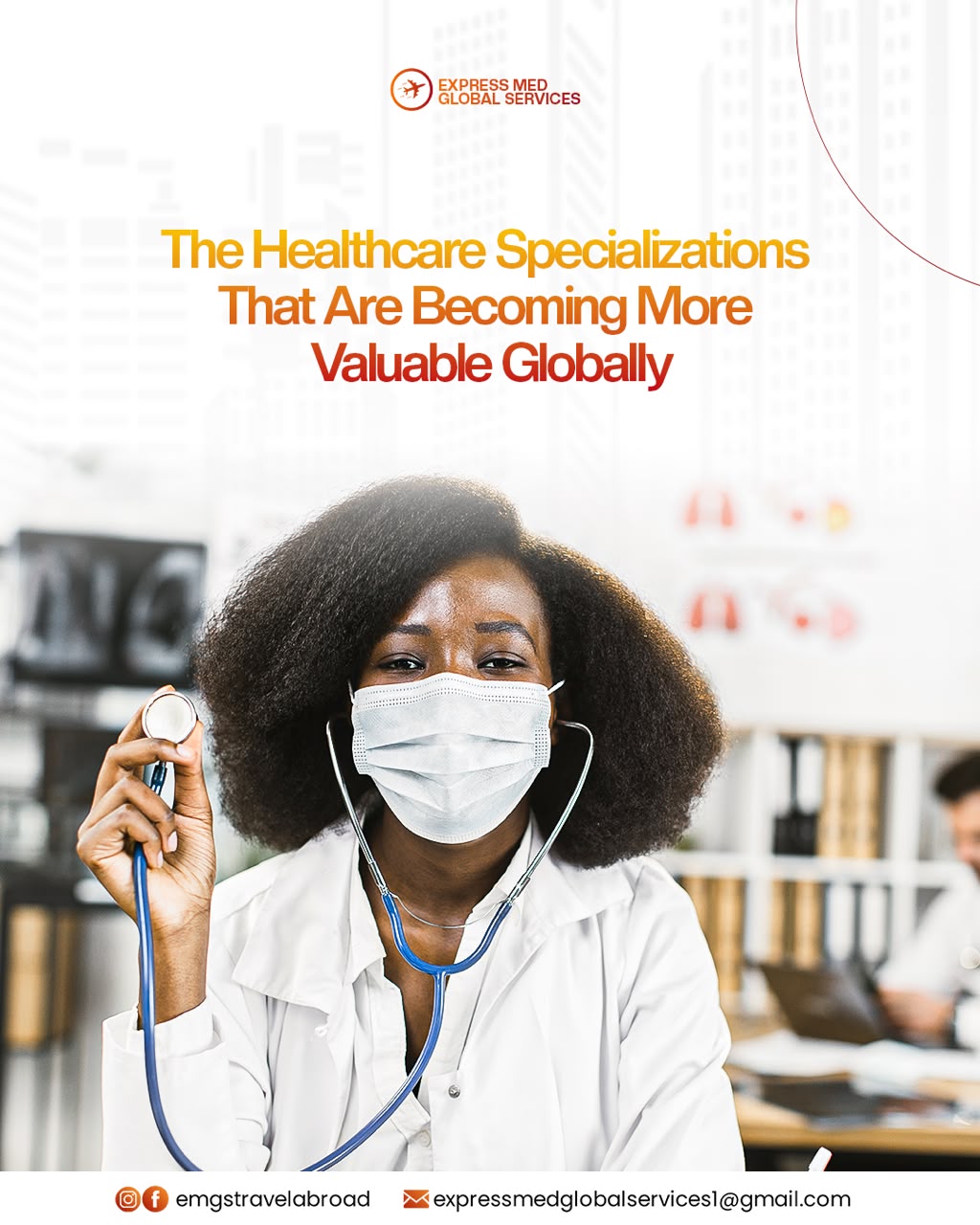
The Healthcare Specializations That Are Becoming More Valuable Globally
Healthcare demand is changing around the world, and some specialisations are becoming increasingly difficult for health systems to fill. For African healthcare workers planning their next move, knowing where that demand is heading could make a big difference to the career opportunities available abroad.
For African healthcare workers thinking about working abroad, choosing a specialty can affect much more than your day-to-day job. It can influence where you can work, how quickly you find opportunities, how difficult registration may be, and how much room you have to grow once you arrive. As healthcare systems face ageing populations, chronic disease, workforce shortages and growing demand for specialised care, some areas of healthcare are becoming particularly valuable internationally.
The world is not simply short of healthcare workers
It is tempting to hear about a global healthcare shortage and assume that anyone with a healthcare qualification will have plenty of options abroad.
It doesn't quite work that way.
Healthcare systems can have thousands of vacancies while still struggling to recruit people with the right experience for particular roles. A hospital may have enough applicants for one position but struggle to fill another for months.
That is why the conversation is gradually moving from "Where are healthcare workers needed?" to "Which healthcare skills are becoming difficult to replace?"
For African professionals, that distinction matters. Your qualification may get you into the conversation, but your area of expertise can determine how many doors actually open.
Nursing remains in demand, but the opportunities are becoming more specialised
Nursing is still one of the clearest examples of how demographic change is affecting healthcare demand.
As populations age, healthcare systems need more professionals to care for people with complex and long-term conditions. The World Health Organization's 2025 State of the World's Nursing report estimated a global nursing shortage of 5.8 million in 2023, even though the global nursing workforce has grown considerably since 2018.
But there is an important detail behind those numbers.
Not every nursing role faces the same demand.
Professionals with experience in areas such as critical care, emergency nursing, mental health, oncology, perioperative care, paediatrics, geriatrics and community care can find themselves competing in very different labour markets.
This is one reason gaining meaningful experience before relocating can be so important. Simply saying "I'm a nurse" tells an international employer very little. Your specialty, years of experience, registration and ability to work within a particular clinical environment tell them much more.
Mental health is becoming harder for healthcare systems to ignore
Mental healthcare is another area where demand is being shaped by a problem that cannot be solved simply by building more general hospital capacity.
Mental health conditions affect hundreds of millions of people globally, while many countries continue to have significant shortages of mental health professionals.
The challenge is particularly complicated because mental healthcare is not limited to psychiatric hospitals. Demand exists across community services, primary care, schools, hospitals, addiction services and elderly care.
For healthcare professionals interested in this field, that creates opportunities beyond traditional psychiatric settings.
It also reflects a broader change in healthcare: mental health is increasingly being treated as part of overall health rather than something that sits separately from it.
Geriatric and elderly care are becoming increasingly important
This one is almost inevitable when you look at population trends.
People are living longer, and many countries have growing older populations. That creates a need not only for more healthcare workers but for professionals who understand the particular clinical and social needs that come with ageing.
Geriatric medicine, elderly care nursing, rehabilitation, occupational therapy, physiotherapy and related disciplines can therefore become increasingly valuable.
And there is a deeper migration lesson here.
Healthcare demand is often predictable when you understand demographics.
If a country has an ageing population, it is reasonable to expect increasing pressure on services dealing with chronic disease, mobility, dementia, rehabilitation and long-term care.
For someone planning a career that may eventually cross borders, understanding these trends can be more useful than chasing whatever profession is currently trending on social media.
Oncology is growing alongside the global cancer burden
Cancer care is another area where specialist knowledge is becoming increasingly important.
The global burden of cancer is rising as populations grow and age, while improvements in diagnosis mean more patients are also entering treatment pathways.
That creates demand across the entire cancer-care system: oncology nursing, radiation therapy, medical oncology, surgical oncology, radiology, pathology, pharmacy and supportive care.
The important thing here is that cancer care isn't one profession.
It is an ecosystem.
A healthcare professional who develops expertise in one part of that ecosystem may find opportunities in places where the general healthcare workforce is relatively well supplied but specialist cancer services remain under pressure.
Emergency and critical care remain difficult areas to staff
There is something different about emergency and critical care.
These environments require professionals who can make decisions under pressure, manage complex patients and work effectively as part of multidisciplinary teams.
They also require experience that cannot simply be acquired through a short online course.
That makes experienced professionals in emergency nursing, intensive care, anaesthesia and related specialties particularly valuable.
For an African healthcare worker, this is another reason to think carefully about the quality of your experience, rather than simply counting the number of years you've worked.
Five years of experience does not automatically mean five years of specialist expertise.
What you have actually done during those years matters.
Rehabilitation is becoming more important as healthcare gets better at keeping people alive
There is an interesting paradox in modern medicine.
As healthcare improves, more people survive illnesses and injuries that once would have been fatal.
But survival is not necessarily the same as full recovery.
Patients may need physiotherapy after surgery or neurological injury. Occupational therapy may help someone return to daily activities. Speech and language therapy may become necessary after stroke or other conditions.
This is why rehabilitation professions can become more important as healthcare systems become more sophisticated.
The goal is no longer simply to keep someone alive.
It is increasingly about helping them return to the best possible quality of life.
Pharmacy is changing too
Pharmacy is another field where the traditional picture of the profession is becoming too narrow.
Pharmacists increasingly work across hospitals, clinical teams, medication management, chronic disease care and specialised treatment.
The growth of complex therapies also means healthcare systems need professionals who understand how medicines interact with increasingly complicated treatment plans.
For African pharmacists considering international careers, this can make advanced clinical experience particularly useful.
Again, the lesson is not simply "pharmacy is in demand."
It is that the value of a healthcare qualification can increase when it is paired with specialised knowledge that healthcare systems struggle to replace.
Medical laboratory and diagnostic skills are becoming more important
Healthcare cannot treat what it cannot accurately diagnose.
As medicine becomes increasingly dependent on laboratory testing, imaging and other diagnostic technologies, the professionals behind those systems become essential to the entire healthcare pathway.
Medical laboratory scientists, radiographers, sonographers and other diagnostic specialists therefore sit in an important part of the healthcare ecosystem.
And there is an additional advantage to developing technical expertise in this area: healthcare systems increasingly need professionals who can work alongside technology rather than simply perform routine tasks that technology may eventually automate.
That distinction will become increasingly important as artificial intelligence enters diagnostics and clinical decision-making.
Technology is changing which healthcare skills are valuable
This is where the future of healthcare careers becomes particularly interesting.
Artificial intelligence, automation and digital health are not necessarily replacing healthcare professionals.
But they are changing what professionals are expected to do.
A clinician who understands digital systems, data, remote monitoring or AI-assisted workflows may eventually have an advantage over someone whose skills remain entirely tied to traditional processes.
The same applies to professionals working in health informatics, clinical data, digital health and healthcare technology.
The healthcare worker of the future may increasingly need to be both clinically competent and technologically comfortable.
That doesn't mean every nurse needs to become a software engineer.
It does mean ignoring technology altogether could become increasingly difficult.
But don't choose a specialty simply because someone says it is "in demand"
This is where career planning needs to become more personal.
A specialty being highly valued internationally does not automatically make it the right specialty for you.
You need to consider whether you actually enjoy the work, whether you can gain quality experience, what additional qualifications are required and whether the professional registration process is realistic in the countries you're considering.
There is also the question of timing.
A specialty that is in high demand today may face a different labour market five or ten years from now.
So rather than chasing shortages, look for structural demand.
Ageing populations.
Chronic disease.
Mental health.
Cancer.
Rehabilitation.
Emergency care.
Digital healthcare.
These are not short-term social media trends. They are connected to deeper changes in how populations live and how healthcare is delivered.
Your experience can be as important as your specialty
This is particularly important for African healthcare workers.
Two people can hold the same qualification and have very different international opportunities.
One may have worked in a major hospital, gained specialist experience, handled complex cases and developed leadership skills.
Another may have the same basic qualification but limited exposure to the specialty.
International employers and regulators don't just look at the title on your certificate.
They may want evidence of what you have actually done.
That is why the years before migration matter.
If international mobility is part of your long-term plan, don't spend those years simply waiting to leave.
Build a professional profile that gives you options when you eventually do.
The bigger opportunity is in becoming difficult to replace
The global healthcare market is not simply rewarding people because they have healthcare qualifications.
It is increasingly rewarding professionals who can solve specific problems.
Someone who can manage critically ill patients.
Someone who understands complex cancer care.
Someone who can support an ageing population.
Someone who can work across mental health services.
Someone who understands rehabilitation.
Someone who can combine clinical knowledge with digital systems.
That is a more useful way to think about international employability.
Instead of asking, "Which healthcare job can help me migrate?"
Ask:
"Which healthcare expertise will still be valuable wherever healthcare is going?"
That question leads to a much stronger career strategy.
What this means if you're still planning your career
If you're still in Nigeria or elsewhere in Africa and international work is one of your long-term goals, you don't need to panic and suddenly change your entire career because a particular specialty is trending.
You need to become deliberate.
Research where healthcare systems are struggling.
Understand which specialties are supported by long-term demographic and clinical trends.
Look at the registration requirements in the countries you may eventually consider.
Seek quality experience rather than simply accumulating years.
Develop transferable skills.
And keep your options open.
The strongest healthcare migration strategy isn't necessarily to predict the exact country that will need you five years from now.
It is to build a professional profile that several countries could find valuable.
Because immigration policies will change.
Countries will change their recruitment priorities.
Technology will change how healthcare is delivered.
But the need for professionals who can solve difficult healthcare problems is unlikely to disappear.
And for African healthcare workers, that may be the most important career advantage to build: not just a qualification that allows you to work abroad, but expertise that makes your work valuable wherever you go.
Contact Us, click on this link https://selar.co/m/Express_Global to purchase any of our services or visit our website https://emgs.global/ — we're just a click away.
For CV, Supporting Statement, and Cover Letter: Chat this customer care number: +234 905 672 3938
Enjoyed this post? Like & share the knowledge!
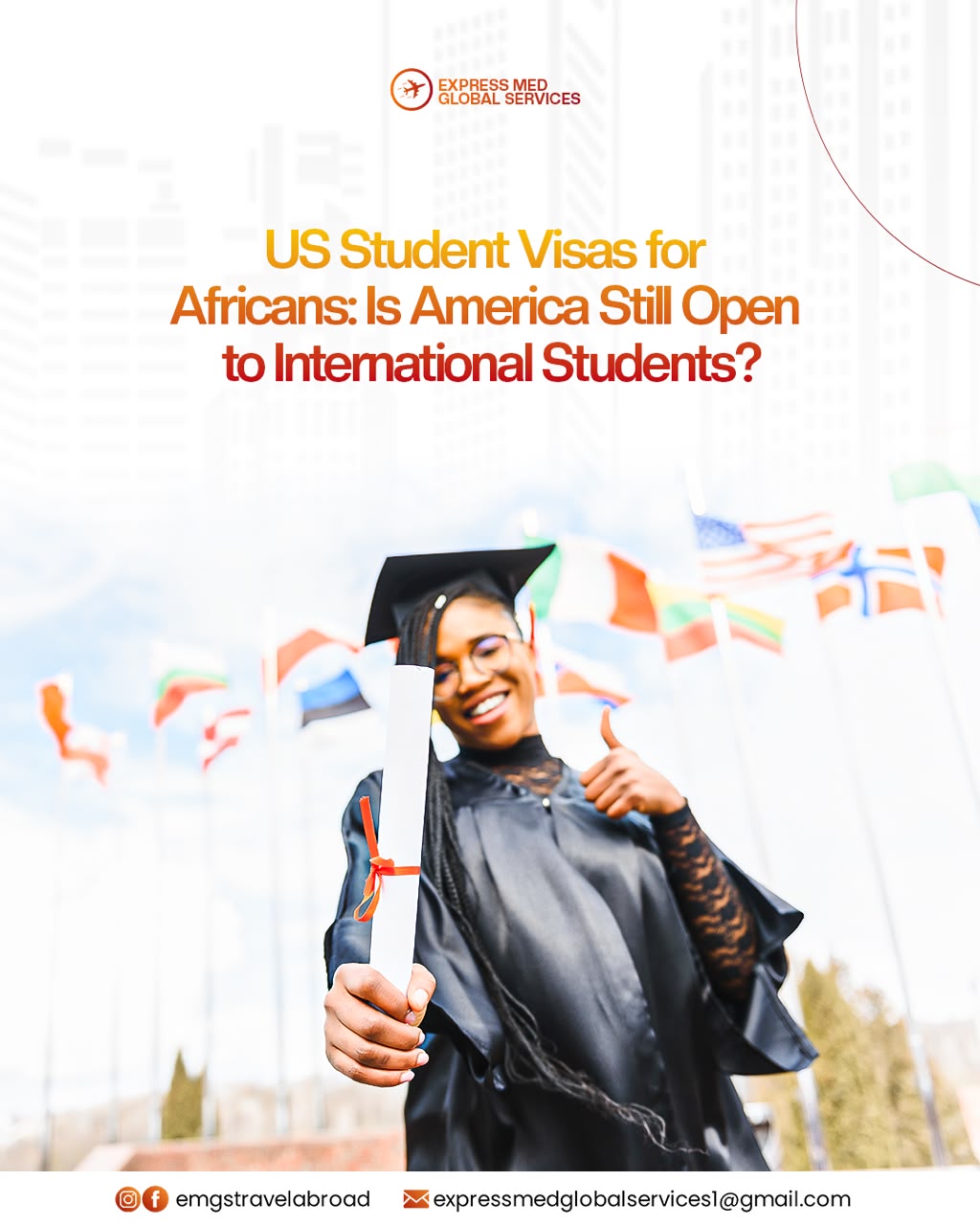
US Student Visas for Africans: Is America Still Open to International Students?
EMGS Team
27th jul, 2026
For years, the American dream came with a familiar route for many African students: find a university, secure admission, prepare your documents, and apply for a visa. Unfortunately, for a while now, that route has become less straightforward. The U.S. immigration proclamation affecting visa issuance for nationals of several countries has left many students asking a simple but important question: Is America still open to African students? The concern is understandable. For generations, studying in the United States has represented far more than earning a degree. It has symbolized opportunity. World renowned universities, advanced research facilities, global professional networks, and the possibility of building an international career have made America one of the world’s most attractive study destinations. However, recent immigration changes have created uncertainty for many prospective students and their families. The reality is more complicated than a simple yes or no. The United States remains open to many international students, but the pathway has become more complicated for applicants from some countries. Visa eligibility now depends more heavily on factors such as nationality, current regulations, and individual circumstances. Understanding this difference is essential.

The Reality of Moving Abroad: Does Relocation Mean Starting Over?
EMGS Team
23rd jul, 2026
One of the biggest fears people have about moving abroad isn't about visas alone. It is the fear of losing everything they have spent years building. The career. The reputation. The professional network. The confidence that comes from knowing how things work. Many prospective migrants ask the same question: "Will I have to start all over again?" The honest answer is more complicated than a simple yes or no. For some people, relocation feels like pressing the reset button. They arrive in a new country and discover that employers expect local experience, professional licensing may be required, and the network they spent years building no longer exists. At the same time, they are not truly starting from zero. Their education, work experience and technical skills still matter. Their discipline, and professional maturity do not disappear simply because they crossed a border. Understanding what actually changes after relocation and what does not, can help migrants prepare more realistically and make better long-term decisions.