
EMGS Team
27th jul, 2026
0 reads
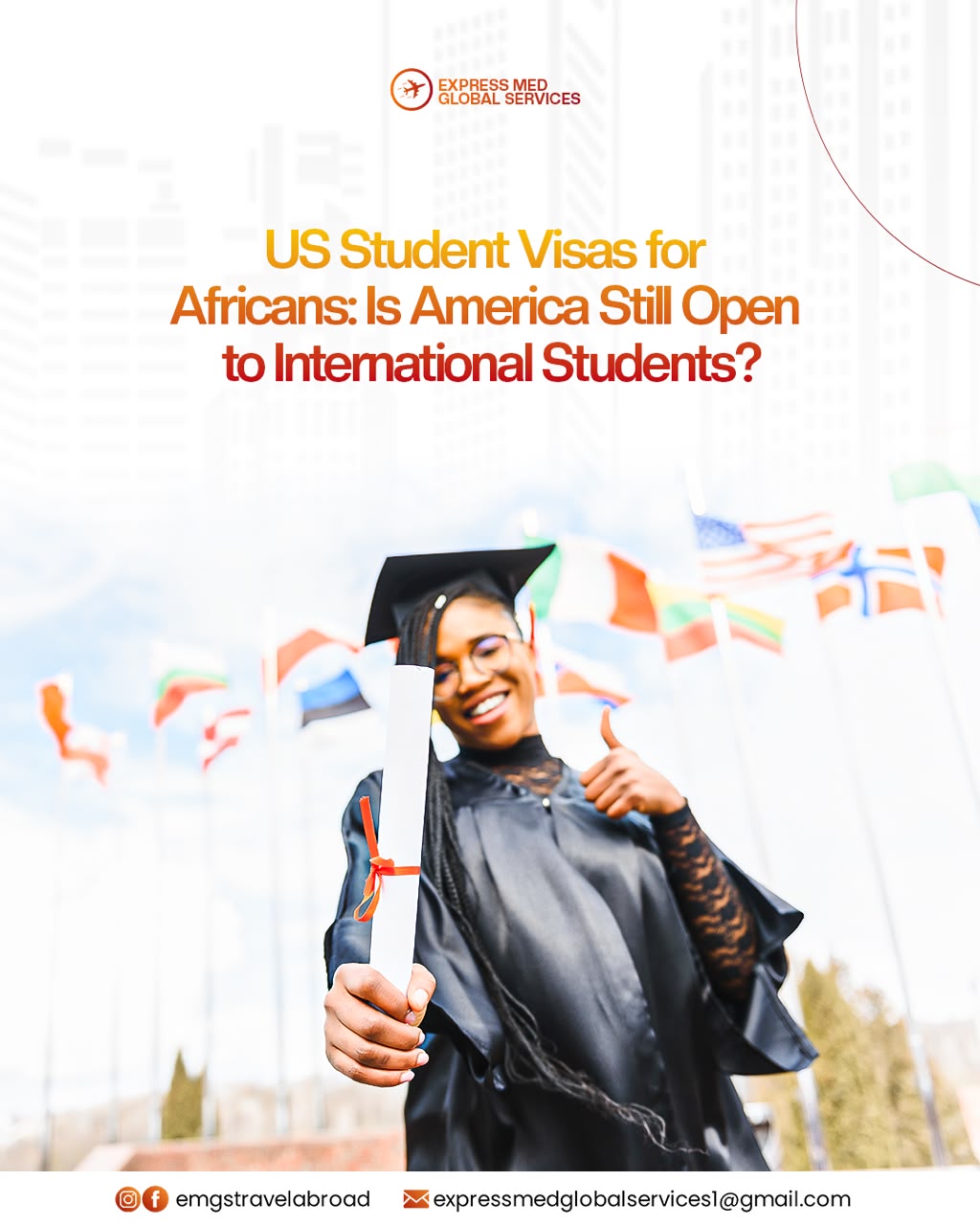
US Student Visas for Africans: Is America Still Open to International Students?
For years, the American dream came with a familiar route for many African students: find a university, secure admission, prepare your documents, and apply for a visa.
Unfortunately, for a while now, that route has become less straightforward.
The U.S. immigration proclamation affecting visa issuance for nationals of several countries has left many students asking a simple but important question:
Is America still open to African students? The concern is understandable.
For generations, studying in the United States has represented far more than earning a degree. It has symbolized opportunity.
World renowned universities, advanced research facilities, global professional networks, and the possibility of building an international career have made America one of the world’s most attractive study destinations.
However, recent immigration changes have created uncertainty for many prospective students and their families. The reality is more complicated than a simple yes or no.
The United States remains open to many international students, but the pathway has become more complicated for applicants from some countries. Visa eligibility now depends more heavily on factors such as nationality, current regulations, and individual circumstances.
Understanding this difference is essential.
What Changed for African Students?
The United States regularly reviews its immigration policies based on security, diplomatic, and administrative considerations.
The 2026 U.S. presidential proclamation introduced country specific visa restrictions affecting nationals of several countries, including some African nations. Among the affected categories are certain F, M, and J visas used by international students and exchange visitors.
However, these restrictions do not apply equally to every African country or every international student.
This means two students with similar academic backgrounds may experience very different immigration realities depending on their nationality.
A student from an unaffected country may continue through the standard student visa process, while a student from a country included in current restrictions may face additional limitations or requirements.
Students should avoid relying on assumptions, social media discussions, or outdated information.
The most reliable source remains official U.S. government guidance. The U.S. Department of State provides updated information on visa policies and requirements: https://travel.state.gov/content/travel/en/us-visas.html
Students can also access guidance on studying in the United States through the Department of Homeland Security’s official Study in the States platform: https://studyinthestates.dhs.gov/
Is America Closed to All African Students?
No. This is one of the biggest misunderstandings surrounding recent immigration changes.
The United States continues to welcome international students from many countries, including across Africa. American universities still admit talented students because international enrolment contributes to academic diversity, research collaboration, and global exchange.
However, the pathway has become more complicated for some applicants. The key question is not simply:
“Can Africans still study in America?” The more accurate question is: “Can I, based on my nationality and circumstances, currently qualify for a U.S. student visa?”
Students must look at their individual situation rather than assume that a policy affecting one group automatically applies to everyone.
Check Your Country Before You Apply
One of the biggest mistakes prospective students make is assuming immigration rules apply equally everywhere. They do not.
Before paying application fees, accepting admission offers, paying tuition deposits, or making travel arrangements, students should always confirm the current requirements that apply to them.
Important areas to review include:
- Whether their nationality is affected by current restrictions.
- Whether exceptions or exemptions apply.
- Required documentation.
- Visa application procedures.
- Processing timelines.
Making decisions based on rumours can lead to unnecessary financial losses and disappointment.
Immigration policies can change quickly, which makes staying updated an important part of the study abroad process.
What Should Affected Students Do Next?
Changes in immigration policy can create uncertainty, but uncertainty does not mean students should abandon their plans.
Instead, it means preparation has become even more important.
Students should:
- Follow official immigration updates.
- Confirm their eligibility before making major financial commitments.
- Maintain accurate documentation.
- Seek professional guidance where necessary.
- Consider alternative destinations if their preferred pathway becomes unavailable.
A strong migration plan should always include awareness of changing circumstances.
Admission Is Only the Beginning
Receiving admission from an American university remains a significant achievement.
However, admission does not automatically guarantee permission to enter the United States.
Universities evaluate applicants based on academic qualifications, programme requirements, and institutional standards.
Visa officers assess applicants according to U.S. immigration requirements.
These are separate processes handled by different authorities.
A student may have an excellent academic record and still need to demonstrate that they meet the requirements for their visa category.
This is why students should treat university admission and visa preparation as two connected but separate stages.
Why Student Visa Preparation Matters
Where visa interviews are required, they remain an important part of the application process.
Visa officers are not simply assessing whether a student has been accepted by a university. They are evaluating whether the applicant qualifies for the visa category and whether their stated study plans are consistent, credible, and supported by evidence.
Students should be prepared to explain:
- Why they selected their university.
- Why they chose their specific programme.
- How the programme connects with their career goals.
- How they will finance their education.
- Why studying in the United States makes sense for their future plans.
Many visa challenges occur because applicants are unable to clearly explain their plans, provide consistent information, or present adequate documentation.
Preparation matters.
Financial Planning Remains Essential
Studying in the United States requires significant financial preparation. Tuition is only one part of the total cost.
Students must also consider accommodation, health insurance, transportation, books, and living expenses.
Visa applicants may need to demonstrate that they have realistic plans for funding their education.
This may include:
- Personal savings.
- Family sponsorship.
- Scholarships.
- Educational funding.
- Other documented financial support.
The purpose is not simply to show that funds exist.
Applicants should understand how their financial resources will support them throughout their studies.
Strong financial preparation can make the visa process clearer and more credible.
Choosing the Right Study Destination
While the United States remains one of the world’s leading education destinations, students should make decisions based on long term value rather than assumptions.
The best destination depends on individual goals, career plans, finances, and immigration circumstances.
Students should consider:
- Programme quality.
- University reputation.
- Tuition costs.
- Scholarship opportunities.
- Career opportunities after graduation.
- Post study work options.
- Long term personal goals.
A country should not only provide a degree. It should provide a realistic pathway towards the future a student wants to build.
Understand Your Long-Term Plans
Many students focus almost entirely on securing admission. Fewer spend enough time thinking about what comes after graduation.
Some students hope to return home with internationally recognised qualifications.
Others hope to gain professional experience before returning or explore future opportunities where legally available.
For eligible graduates, options such as Optional Practical Training (OPT) may allow temporary work experience related to their field of study after completing their programme. However, eligibility depends on meeting U.S. immigration requirements and should not be viewed as a guaranteed route to permanent residence.
Students should choose programmes because they provide genuine educational and career value, not simply because they believe one country guarantees migration success.
A strong education should remain valuable regardless of where a career eventually takes you.
Avoid Common Mistakes
Many problems occur because applicants focus heavily on university admission while paying less attention to immigration requirements.
Common mistakes include:
- Applying without understanding current visa rules.
- Relying on unofficial immigration advice.
- Providing inconsistent information.
- Presenting weak financial evidence.
- Making major payments before confirming eligibility.
- Assuming admission guarantees visa approval.
Good preparation reduces avoidable challenges.
The EMGS Perspective
At Express Medical Global Services, we encourage students to separate perception from reality.
Recent immigration changes have created genuine concerns among African students considering the United States. However, the reality is not that America has completely closed its doors to international students.
The situation is more specific. Some applicants face new restrictions depending on their nationality, while others may continue through the standard student visa process.
Rather than relying on assumptions or social media discussions, students should verify the latest immigration guidance that applies specifically to their circumstances before making important decisions.
Strong academic preparation remains important.
So do accurate documentation, realistic financial planning, and a clear understanding of the immigration process.
Students who prepare carefully are often far better positioned than those who rely on incomplete information or outdated expectations.
Migration begins long before you board a flight. It begins with informed decisions.
Conclusion
The question is no longer simply whether America welcomes international students.
The better question is whether the current immigration rules allow you to pursue your study plans under your specific circumstances.
For some African students, studying in the United States remains possible.
For others, recent restrictions may require consideration of alternative destinations.
Regardless of your destination, one principle remains unchanged.
Successful international education begins with accurate information, realistic expectations, careful preparation, and decisions based on current facts rather than outdated assumptions.
Policies may change. Preparation should not. For prospective students, staying informed may be just as important as earning admission.
Visa Application: +234 913 858 9678
CV and Support Letters: +234 905 672 3938
Job Application: +234 904 755 2504
NB: You can purchase EMGS travel and migration services here. You can also refer others and earn generously.
Contact us today to begin your relocation journey.
Enjoyed this post? Like & share the knowledge!
The Healthcare Specializations That Are Becoming More Valuable Globally
EMGS Team
24th jul, 2026
Healthcare demand is changing around the world, and some specialisations are becoming increasingly difficult for health systems to fill. For African healthcare workers planning their next move, knowing where that demand is heading could make a big difference to the career opportunities available abroad.

The Reality of Moving Abroad: Does Relocation Mean Starting Over?
EMGS Team
23rd jul, 2026
One of the biggest fears people have about moving abroad isn't about visas alone. It is the fear of losing everything they have spent years building. The career. The reputation. The professional network. The confidence that comes from knowing how things work. Many prospective migrants ask the same question: "Will I have to start all over again?" The honest answer is more complicated than a simple yes or no. For some people, relocation feels like pressing the reset button. They arrive in a new country and discover that employers expect local experience, professional licensing may be required, and the network they spent years building no longer exists. At the same time, they are not truly starting from zero. Their education, work experience and technical skills still matter. Their discipline, and professional maturity do not disappear simply because they crossed a border. Understanding what actually changes after relocation and what does not, can help migrants prepare more realistically and make better long-term decisions.